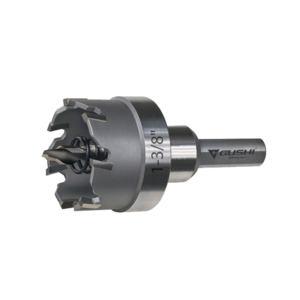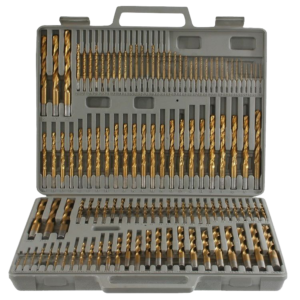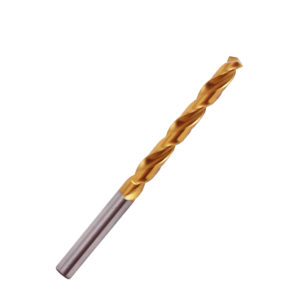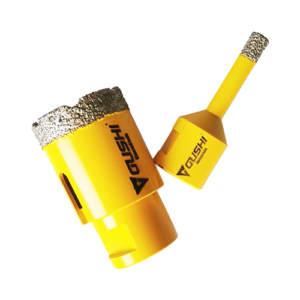
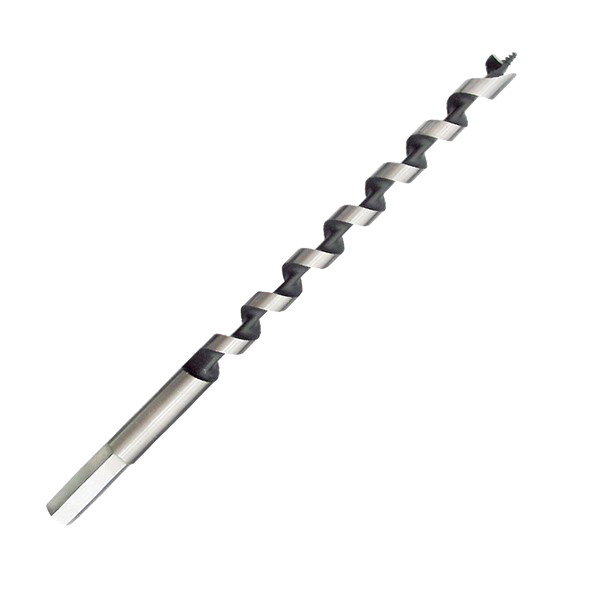
For heavy-duty,precision drilling in soft and hard wood,large section beams,joints,floor boarding,chipboard and plywood.Lewis flute design for rapid chip removal.
| Process | Shank | Flute | Surface | ||||||
| Milded | Round | Hex | 1/4” Hex quick change | SDS | Welded | single | double | B&W | Tin-coated |
| Machine Use | √ | √ | √ | √ | √ | √ | √ | √ | |
| Hand use | √ | √ | √ | √ | √ | ||||
1. The listing, audited
This is the shortest page in the wood-drilling group: one paragraph and a configuration grid. The grid is the interesting part, because it is a matrix with five rows and no column headings, and two of its rows mix categories that do not belong together.
| What the listing says | What is wrong | What to write instead |
|---|---|---|
| Process: Milded | Misspelling of milled. It matters as a word because “milled” is the opposite of the other process these bits are made by, which is forming a flute from strip and welding it to a shank. | Milled from solid bar, or welded flute, stated as the distinction it is. |
| Flute: Welded / single / double | Three items in one row, but only two belong together. Single and double describe the number of spirals; welded describes how the spiral was made. A bit can be a welded single or a milled double, and the grid gives no way to say which. | Two separate fields: flute count (single or double), and construction (milled or welded). |
| Surface: B&W / Tin-coated | B&W is unexplained. It is the black oxide finish, with the spiral blackened and the cutting faces left bright, which is why the two letters. | Black oxide (B&W) or Ti-coated, with a note that neither touches the point. |
| Shank: Round / Hex / 1/4″ hex quick change / SDS | Correct and useful, but the SDS option carries no warning. A wood auger on SDS must run in rotation only; in hammer mode the screw point is destroyed in one hole. | Add “rotation only, hammer action off” beside SDS. |
| Machine use and hand use rows | Tick marks with no legend. It is impossible to tell whether a missing tick means “not available” or “not recommended”. | State the condition rather than a tick: for example, quick-change is hand and machine; SDS is machine only. |
| No dimensions at all | The page never states a diameter, a length, a pitch or a core size. A buyer cannot order from it, and an engineer cannot compare it with anything. | A table of diameter against overall length, with the core ratio and the flute count for each. |
| Lewis flute named once, never explained | It is the single most specific technical claim on the page, and it is used as a decoration. | Describe the geometry: deep channel, short pitch, polished walls, shaving rather than dust. |
What the page does get right is the material list. Naming softwood, hardwood, large section beams, joints, floor boarding, chipboard and plywood is more precise than the usual “for wood”, because those are seven different drilling problems and only some of them need an auger.
2. One circle, two channels
An auger’s cross-section is a circle split into two jobs. The solid centre is the core. The spiral cut around it is the flute. There is nothing else, and the two areas have to add up to the circle.
| Core as a share of diameter | Flute area as a share of the circle | What the bit feels like | Where it is usually found |
|---|---|---|---|
| 0.25 D | 93.8% | Huge chip room, very flexible | Cheap long bits, short-life trade tools |
| 0.30 D | 91.0% | Plenty of room, still springy | Long softwood augers at the low end |
| 0.35 D | 87.8% | The usual compromise | General-purpose augers |
| 0.40 D | 84.0% | Noticeably stiffer, still clears well | Hardwood and precision work |
| 0.45 D | 79.8% | Stiff, but the flute starts to feel shallow | Short bits and dense timbers |
| 0.50 D | 75.0% | Half the circle is steel; clearance becomes the limit | Special purpose, or a bit that is really a reamer |
Those percentages are not intuition, they are the geometry: the flute fraction is 1 − (dc/D)². What the table shows is that the range from 0.30 to 0.45 covers a flute area between 91% and 80% of the circle — only an eleven-point spread across the whole practical band. The visible difference between two augers is mostly in the core, not in the chips.
3. The trade is not fair in either direction
If core and flute traded evenly, choosing between them would be a matter of taste. They do not: the two properties scale with different powers of the same dimension. Bending stiffness goes with the fourth power of the core diameter. Flute area gives up only the square. So a small change in the core is a large change in stiffness and a small change in clearance — and the effect is strongly asymmetric.
| Core ratio | Flute area, relative to 0.35 D | Bending stiffness, relative to 0.35 D | What the change costs |
|---|---|---|---|
| 0.25 D | +6.8% | −74% | You gain 7% of chip room and lose three quarters of the stiffness |
| 0.30 D | +3.7% | −46% | Still a bad trade: 4% of room for half the stiffness |
| 0.35 D | — | — | The reference |
| 0.40 D | −4.3% | +71% | A good trade: 4% of room buys 71% more stiffness |
| 0.45 D | −9.1% | +173% | Still good, until the flute becomes too shallow to clear |
| 0.50 D | −14.5% | +317% | Past the useful point: the bit no longer clears its own chips |
Read the two middle rows together and the design logic appears. Going from 0.30 to 0.40 — a change of one tenth of the diameter — multiplies stiffness by 3.2 and costs 8% of flute area. No other single decision on an auger buys that much. It is why a respectable long auger has a core near 0.38 to 0.40 and a cheap one sits nearer 0.30, and why the cheap one is the one that wanders.
Where the trade stops working
Above about 0.45 the flute is no longer a chip channel; it is a groove. The area is still 80% of the circle, but the depth of the channel relative to its width has fallen, and a chip that cannot curl inside the channel starts to slide as a block. That is the point where a stiffer bit starts to jam more often, not less, and it is why the practical band stops where it does.
4. Single flute against double
The number of spirals is a second, independent split of the same circle. A single flute puts all the available chip room into one wide channel; a double puts it into two narrower ones and adds a second cutting edge opposite the first.
| Single flute (shown in the photograph) | Double flute | |
|---|---|---|
| Channels | One, wide and deep | Two, each roughly half the width |
| Chip room per channel | Largest | About half of the single, per channel |
| Total chip room | Slightly larger, because there is one less spiral ridge taking up area | Smaller by the area of the second ridge |
| Cutting continuity | One edge engages per revolution, so the load pulses | An edge engages twice per revolution, so the load is smoother |
| Radial balance | One-sided push, which the core has to resist | Balanced, so the bit tracks straighter |
| Best for | Deep holes in softwood, where clearing matters more than straightness | Hardwood, precision joints, and any hole that must come out straight |
| Worst for | Hardwood, where the unbalanced push plus a thin core produces a curved hole | Very deep softwood holes, where two narrow channels pack sooner |
The trade is not only about volume. A single flute loads one side of the bit per revolution, which means the core is being pushed sideways sixty times a second at drilling speed. That is survivable with a 0.40 D core and marginal with a 0.30 D one, which is why the two variables interact: a single flute demands a thicker core than a double, for the same length. A long single-flute auger with a thin core is the worst combination in the whole family, and it is also the cheapest to make.
5. What Lewis actually designed
The listing uses “Lewis flute” as a phrase and never says what it means. It is a specific geometry, and its three features work together rather than separately.
| Feature | What it is | What it does | What happens if you remove it |
|---|---|---|---|
| Deep channel | A flute cut close to the core, deeper than a twist drill’s | Holds a curled shaving without compressing it | The chip is crushed against the wall and becomes dust, which packs |
| Short pitch | One turn of the spiral in roughly one to one and a third diameters | Moves the shaving along the bit quickly, one turn at a time | A long pitch means the chip stays in the hole for more turns and rubs |
| Polished flute wall | The channel is bright and smooth, with the blackening only on the land | Low friction, so a resinous chip slides instead of welding | A rough or painted channel grips pine resin within a few holes |
That combination produces a spiral angle around 18 to 22 degrees, where a general-purpose twist drill for metal sits nearer 25 to 35. The shallower angle is not a compromise; it is what a deep hole in a soft material needs, because the limiting factor is transport rather than cutting.
Why the chip must curl, not crumble
Softwood produces a long, coherent shaving when the point is sharp and the feed is steady. That shaving occupies a predictable volume and travels as a unit. As soon as the point dulls, the same cut produces short fragments and dust; those fragments have a much larger surface area for the same mass, they interlock, and they stop moving. So a dull auger fails twice: once at the edge, and again in the flute. This is why the polished channel matters more on an auger than on any other wood bit, and why a bit that has been run hot — with the blackening burnt into the flute — never clears properly again.
6. The screw point and its two pre-cutters
The photograph shows a screw point: a short threaded taper at the very tip, flanked by two raised cutters. Each part has a job, and each has a characteristic failure.
| Part | What it does | How it fails | What the operator notices |
|---|---|---|---|
| Screw point | Bites and pulls the bit into the timber, so the feed is partly self-acting | Threads round over, or snap off in a knot | The bit stops pulling and has to be pushed; on breakthrough it grabs |
| Two pre-cutters | Sever the fibres ahead of the main edge, which is what stops the entry tearing | Chips or rounds, usually on a nail or a knot | Ragged rim on the entry face; the hole is the right size but the edge is furry |
| Main cutting lips | Remove the bulk of the material | Dull and start rubbing rather than cutting | Heat, a burning smell, and fine dust instead of shavings |
The grab at breakthrough
A screw point is a self-feeding device, and near the exit face there is suddenly much less material resisting it. The bit pulls itself through, the torque spikes as the lips take the last few millimetres in one go, and the exit face tears. On a visible surface that is the difference between a clean hole and one that needs a patch.
Two remedies work, and both are about reducing the pull at the end. The first is to ease the feed for the last diameter of depth and let the lips cut rather than the screw pull. The second, on a surface that matters, is to stop when the screw point just breaks through and finish from the other side, using the small hole as the guide.
7. Four shanks and one warning
The listing offers four shanks and ticks machine use and hand use beside them without saying which goes with which. The choice is made by the tool, and one of the four carries a condition that is not stated anywhere on the page.
| Shank | Fits | What it buys | What it costs | Condition |
|---|---|---|---|---|
| Round | Three-jaw chuck | Cheapest, fits almost anything | Jaws can slip under high torque, especially in reverse | None |
| Hex | Three-jaw chuck, bit holder | Flats give the jaws a positive drive; no slip | Slightly higher cost; the hex must match the chuck size | None |
| 1/4″ hex quick change | Quick-change holder | Fast changes on a run of holes; compact | Limited to the smaller diameters and shorter lengths | Holder must be rated for the torque |
| SDS | Rotary hammer | Tool-free change and a positive lock | Bulkier; the machine is heavier than the job needs | Rotation only. Hammer action destroys the point. |
There is a pattern worth noticing: the shank choice has nothing to do with the wood. It is entirely about how the bit is held, and the only one that can damage the bit is the one that also gives the most secure lock. That is the trap in the SDS option — it is the most convenient mount on the list, and the only one with a setting that will ruin it.
Reverse, and why it matters here
An auger in reverse will not cut, but it will try to climb out of the hole, and the screw point makes that worse by gripping in the direction it was designed to pull. Reversing to free a jammed bit is a legitimate technique, but only at low speed and only with the bit already unloaded; reversing at full torque with the bit still buried is how round shanks spin in the chuck and how hex corners round off.
8. B&W against Ti
Neither finish is on the cutting edge. The point and the lips are bare steel, ground sharp; the finishes are on the body and the flute, and they do two different jobs badly and one job well.
| Finish | What it is | What it does for you | What it does not do | When it is worth it |
|---|---|---|---|---|
| B&W (black oxide) | Chemical blackening on the spiral and land, with the cutting faces left bright | Corrosion protection and a mildly lubricious surface in the channel | Nothing for edge wear; it is softer than the steel under it | General work, and anywhere the bit will sit in a damp van |
| Ti-coated | A thin hard coating over the body and flute | Lower friction, so resinous chips slide; better corrosion resistance | Does not harden the point, and does not survive being ground | Deep holes in resinous softwood, and repeated use in the same timber |
| Bright (no finish) | Polished steel | The slickest channel of the three, until it rusts | No corrosion protection at all | Shop use where the bit is cleaned and oiled |
The one that matters on an auger is the channel, not the outside. A coating that reduces friction there pays for itself in deep holes because it delays the moment the shaving starts to drag. A coating on the land, where the bit rubs the hole wall, mostly reduces the polishing that a new bit does to itself in the first metre of drilling — and that polishing is harmless.
9. Softwood, hardwood, and the boards in between
The listing names seven materials, which is unusually specific, and they do not all want the same bit. What separates them is the shaving: a long, coherent curl travels down a Lewis flute, while a short crumb does not.
| Material | Shaving it makes | Flute to choose | Core to prefer | Main risk |
|---|---|---|---|---|
| Softwood, pine and fir | Long curl, resinous | Single | 0.35 to 0.40 D | Resin welding in the channel on deep holes |
| Hardwood, oak and beech | Short chips, some dust | Double | 0.40 to 0.45 D | Burning at the point if the feed is too light |
| Large section beams | Long curl, but the hole is deep | Single, with a thick core | 0.40 D or more | Wandering over a long length |
| Joints and dowel work | Short chips | Double | 0.40 D | Oversize or torn entry on a visible face |
| Floor boarding | Long curl, shallow depth | Either | 0.35 D | Breakthrough tear on the joist below |
| Chipboard | Crumb and dust | Double | 0.40 D | Binder dulls the point quickly |
| Plywood | Mixed, with glue lines | Double | 0.40 D | Glue lines are abrasive and can deflect a thin bit |
Two rows in that table are the ones buyers get wrong. Chipboard and plywood are not softwood, even though they are made from it: the resin binder and the glue lines are abrasive, and a point that would last a hundred holes in pine will be dull in a dozen in chipboard. And hardwood wants the double flute for straightness, not for speed — the chips are shorter, so clearing is easier, but the material gives the bit less of a track and the unbalanced push of a single flute shows up as a curved hole.
The boards that do not need an auger
Chipboard and plywood in normal thicknesses are 18 mm or less, and a brad-point bit or a spur bit will make a cleaner hole in them for less money. An auger earns its place when the depth exceeds about four diameters, which in practice means beams, joists, sole plates and through-wall penetration — not cabinet work.
10. Getting the chip out at depth
A Lewis flute is a conveyor, not a bin. It only works while the shaving keeps moving, and the moment the shaving stops, the channel fills from the bottom up. That is why depth control on an auger is a rhythm rather than a depth limit.
| Depth reached | What to do | Why |
|---|---|---|
| First 2 diameters | Steady feed, no withdrawal | The channel is short and the shaving has an easy path |
| 2 to 4 diameters | Withdraw once, spinning, then re-enter | Clears the channel before the shaving starts to buckle |
| 4 to 8 diameters | Withdraw every 2 diameters | Transport becomes the limit rather than cutting |
| Beyond 8 diameters | Withdraw every diameter, and blow the hole out | At this ratio the bit is also flexing, so re-entry straightens the hole |
| Any depth, resinous timber | Withdraw more often than the depth suggests | Resin welds the chip to the channel long before the flute is full |
Withdraw while the bit is still turning. A spinning bit throws the shaving clear as it leaves; a stopped bit drags the shaving back down the channel and leaves it packed at the bottom for the next entry. This one habit is the difference between an auger that drills a metre and one that jams at 200 mm.
Never let it stop in the hole
If the bit stalls with the flutes buried, the chip that was moving stops moving, and the resin cools around it. Restarting then means breaking that bond with torque rather than with speed, which is how points snap and how shanks spin. If a stall happens, reverse briefly at low speed to unload, withdraw, clear the channel, and start again with a lighter feed. Do not restart at full power in the hope that it will break free.
11. Diagnosis
| Symptom | Most likely cause | Test | Fix |
|---|---|---|---|
| Bit wanders over a long hole | Core too thin for the length, or single flute with a thin core | Measure the core at the point end; divide by the diameter | Use a thicker core or a double flute, or drill a shorter pilot hole first |
| Channel packs after 200 mm | Shaving is not curling: point dull, feed too light, or channel not polished | Look at what comes out: dust means the point is rubbing | Sharpen or replace, increase feed slightly, clean the channel with solvent |
| Chip welds to the flute in pine | Resin, made worse by heat | Feel the channel: a sticky film means resin | Clean with solvent, reduce speed, withdraw more often |
| Burning smell and fine dust | Point dull and rubbing, usually in hardwood | Look at the point: a bright flat instead of an edge | Replace or sharpen; do not continue, it work-hardens the surface |
| Bit grabs and tears the exit face | Screw point pulling through with little material left | Inspect the exit side before the point breaks through | Ease the feed for the last diameter, or finish from the other side |
| Shank spins in the chuck | Round shank under high torque, or worn jaws | Mark the shank and the chuck, run a second, see if the marks move | Use a hex shank, or tighten properly and check the jaws |
| Entry face is furry | Pre-cutters dull or chipped | Look at the two raised cutters beside the screw | Replace; a brad-point bit is the better tool on a visible face |
| Point snapped off in a knot | Screw point took the full feed load in dense grain | Look at the break: a clean snap at the thread root | Extract, and drill a pilot through the knot before using the auger |
12. What to put on the purchase order
The listing has no numbers on it, so everything except the option names has to be written down explicitly.
| Field | What to state | Why it matters |
|---|---|---|
| Diameter | In mm, one figure per line | The page gives none at all |
| Overall length | In mm, and the working length if they differ | A long auger’s usable depth is shorter than its overall length by the shank and point |
| Flute count | Single or double | Sets clearing against straightness; the page mixes it with the construction method |
| Construction | Milled from solid, or welded flute | Strength in torsion and how the pitch holds up in service |
| Core ratio | The core diameter, or at least its share of the diameter | It is the single number that predicts whether a long bit will wander |
| Shank | Round, hex, 1/4″ quick change, or SDS | And for SDS, state rotation-only use on the packing |
| Point form | Screw point with two pre-cutters, brad point, or plain | The page does not say, and it changes both the entry and the exit behaviour |
| Surface | Black oxide or Ti-coated | Friction in the channel, not hardness at the edge |
| Marking | Diameter and length on the shank | Long augers look alike on a bench |
| Packing | Tube, sleeve or hanging card | Long bits need a tube; a card creases and the bit escapes |
13. Incoming inspection
Four checks cover almost everything, and the core measurement is the one nobody does.
| Check | Method | Accept | Reject |
|---|---|---|---|
| Core ratio | Measure the flat across the centre at the point end, divide by the diameter | 0.32 to 0.40 for a general auger | Under 0.30 on a long bit: it will flex |
| Pitch consistency | Count turns over the flute length, compare with the stated pitch | Even, with no stretched section near the shank | A stretched pitch: the chip will slow down before it reaches the surface |
| Flute polish | Fingernail along the channel from the point | Slick, continuous, no burr at the milled edge | Catching on a ridge or on burnt resin |
| Point and cutters | Visual at 2×, and a light touch on a scrap of pine | Screw threads sharp, two cutters level and proud | Rounded threads, chipped cutter, point off centre |
| Straightness | Roll on a flat surface, sight along the length | No visible bend | Any bend: a long bit amplifies it immediately |
| Weld or mill finish | Look at the flute root where it meets the core | Milled: continuous grain. Welded: an even bead with no undercut | A weld with a gap or a step |
| Shank fit | Trial in the machine | Seats fully, no rock, no spin under hand torque | Any play |
| Coating | Visual in the channel | Even, not bridging the flute mouth | Coating built up at the flute edge, which narrows the opening |
14. The configuration matrix, decoded
The original page is a grid with five rows and no headings. This is the same information with the categories separated and the conditions stated, which is what a buyer needs in order to specify anything.
| Field | Option | Machine | Hand | Condition or consequence |
|---|---|---|---|---|
| Construction | Milled | Yes | Yes | One piece of steel, uninterrupted grain, pitch holds in service |
| Construction | Welded | Yes | Yes | Cheaper, lighter, allows a thinner core; weaker in torsion |
| Flute | Single | Yes | Yes | Most chip room; needs a thicker core because the load is one-sided |
| Flute | Double | Yes | Yes | Tracks straighter; less room per channel; better in hardwood |
| Shank | Round | Yes | Yes | Cheapest; can slip in a worn chuck under torque |
| Shank | Hex | Yes | Yes | Positive drive, no slip |
| Shank | 1/4″ hex quick change | Yes | Yes | Fast changes; smaller diameters and shorter lengths |
| Shank | SDS | Yes | No | Rotation only; hammer action destroys the screw point |
| Surface | B&W (black oxide) | Yes | Yes | Corrosion barrier and mild lubrication; nothing for edge wear |
| Surface | Ti-coated | Yes | Yes | Lower friction in the channel; does not harden the point |
| Point | Screw with two pre-cutters | Yes | Yes | Self-feeding and clean entry; grabs at breakthrough |
Read the table as three independent choices rather than one list. Construction, flute count, shank and surface do not constrain each other, which is why the original grid could put them on adjacent rows — and why it was misleading to do so.
Frequently Asked Questions
What is a Lewis flute?
A Lewis flute is a deep, open spiral with a short pitch and polished walls, designed so the chip leaves as a curled shaving rather than as dust. The depth gives the shaving somewhere to sit, the short pitch moves it along quickly, and the polish stops it dragging. It is the reason an auger can clear a hole several times its own diameter deep, where a standard twist drill packs solid.
Single flute or double flute?
Single flute gives one wide channel and therefore the most chip room per revolution, which suits deep holes in softwood. Double flute splits the same circle into two narrower channels, so each carries less, but the cutting load is balanced on both sides and the bit tracks straighter in hardwood. The photograph on this page shows the single flute version.
What is the core diameter and why does it matter?
The core is the solid centre left inside the spiral. It carries the torque and resists bending, and its stiffness rises with the fourth power of its diameter, while the flute area it gives up rises only with the square. That asymmetry is why a slightly thicker core is almost free in chip room and very expensive in stiffness to give up. A core at 0.40 of the diameter is about 71% stiffer than one at 0.35, for roughly 4% less flute area.
Why does my auger bit wander in a deep hole?
Usually because the core is too thin for the length, so the bit flexes and follows the operator instead of the hole. A long auger is a slender shaft under feed load; when its stiffness is marginal, every hand movement becomes a side force at the point. Shortening the bit, using a double flute, or starting with a shorter pilot hole all help more than pressing harder.
Can I use the SDS version in a hammer drill?
Only with the hammer action switched off. An SDS shank is a mounting system, not an instruction to impact: the bit is designed for rotation and feed. Running a wood auger in hammer mode drives the point into the timber in pulses, breaks the screw point, and enlarges the hole. Set the tool to rotation only and, if it has one, use the low gear.
Round, hex or quick-change shank?
Round for a standard three-jaw chuck, where it is cheapest and perfectly adequate. Hex for a chuck that slips, because the flats give the jaws something to bite. 1/4 inch hex quick-change for a bit holder and fast changes on a run of holes. SDS for a rotary hammer used in rotation only. All four are legitimate; the machine decides.
Does the Ti coating help?
It reduces friction between the chip and the flute, which matters on deep holes in resinous softwood, and it resists corrosion. It does not make the cutting edge harder in any useful sense, because the cutting edge is a ground steel point, not a coated insert. On a clean hardwood job the black oxide version performs the same for less money.
What is the difference between a welded and a milled flute?
A milled flute is cut from a solid bar, so the core and the spiral are one piece of steel with an uninterrupted grain. A welded flute is formed by wrapping and joining a strip onto a shank, which is cheaper and allows a thinner core. Milled is stronger in torsion and holds its pitch; welded is lighter and less expensive. The listing offers both without saying which is standard.
What does B&W mean on the surface list?
It is the black oxide finish, sometimes written black and white because the spiral is blackened and the cutting faces are left bright. It is a corrosion barrier and a mild lubricant in the flute. It is not a wear coating and it does not affect the point.
Can it drill hardwood?
Yes, and the listing is right to name both soft and hard wood. Hardwood needs a sharper point, a lighter feed and a double flute if straightness matters, because the material gives the bit less of a track. The failure mode in hardwood is a point that dulls and starts rubbing rather than cutting, which shows up as heat and a burning smell before it shows up as a slow hole.
How do I stop the bit jamming at depth?
Withdraw on a rhythm rather than on a feeling. Every two diameters of depth, pull the bit clear while it is still turning so the flute empties, then re-enter. In resinous softwood the chips weld into a plug long before the flute is full, so the signal to watch is the sound and the resistance, not the sight of chips at the surface.
What are the MOQ, lead time, OEM and sample terms?
MOQ is quoted per diameter and per shank type, because the shank is formed separately and long bits ship in tubes. Standard lead time is 20 to 30 days. OEM covers the diameter and length list, the flute type, the shank, the surface finish, the point form and the printing. Samples in two or three sizes can be supplied for a trial in the timber you actually use.