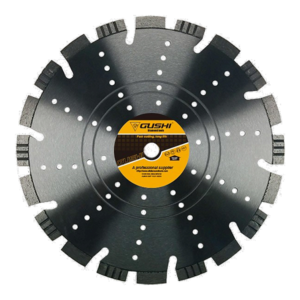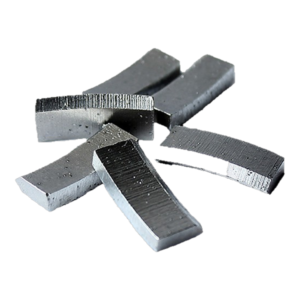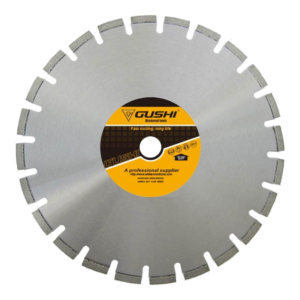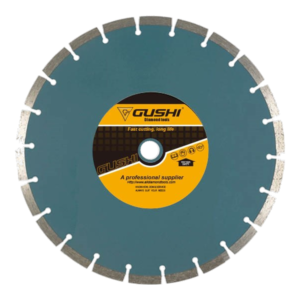
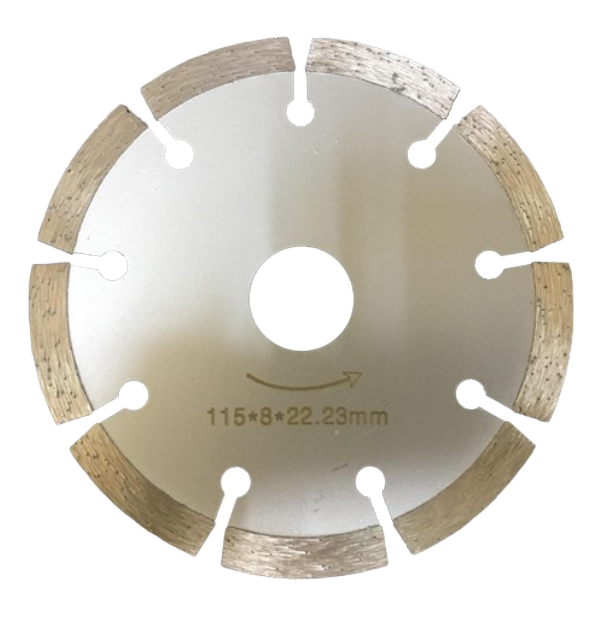
Marble and polished stone punish blunt or aggressive blades with edge chipping and micro-fractures. The HHPST answers this with a hot-pressed diamond rim whose narrow gap and controlled bond keep the cut clean on brittle materials, while still carrying enough diamond reserve to handle granite and porcelain in mixed daily use. The result is a single blade family that covers most stone and tile cutting without swapping discs.
Because the segments are hot pressed rather than cold pressed, the diamond matrix is denser and bonds the grit more firmly. That translates into even wear, steady cutting speed and a noticeably longer service life on the workshop floor. Distributors also benefit from GUSHI’s OEM capability: the same blade can carry a private label, custom packaging and bespoke diameter or arbor combinations.
Full Specifications
| Parameter | Specification |
|---|---|
| Product name | GUSHI HHPST Marble Cutting Diamond Blade |
| Model series | 4HHPST, 4.5HHPST, 5HHPST, 6HHPST, 7HHPST, 8HHPST, 9HHPST |
| Blade type | Hot-pressed narrow-gap diamond saw blade |
| Manufacturing process | Hot pressed (sintered) |
| Diameter range | 4 to 9 inch (100 to 230 mm) |
| Segment width (4 inch) | 1.0 mm |
| Segment width (4.5 inch) | 1.2 mm |
| Segment width (5 to 6 inch) | 1.4 mm |
| Segment width (8 to 9 inch) | 1.6 mm |
| Segment height options | 5 / 7 / 8 / 10 mm |
| Arbor hole options | 16 / 20 / 22.23 / 25.4 mm |
| Rim style | Narrow-gap hot-pressed rim (turbo/continuous style) |
| Bond type | Soft to medium, marble and stone optimized |
| Diamond grit | Industrial synthetic diamond, high quality |
| Core type | Silent (damped) or standard steel core |
| Cutting mode | Wet and dry |
| Max RPM (by diameter) | Up to 15,300 RPM (4 inch) down to 6,600 RPM (9 inch) |
| Applicable materials | Marble, granite, engineered stone, ceramic, porcelain |
| Machines | Angle grinder, tile saw, circular saw, masonry saw |
| Certifications | ISO 9001, CE, EN13236 |
| MOQ | 50 pieces per size |
| Lead time | 25 to 30 days (stock faster) |
| Production capacity | 100,000 diamond-tool sets per month |
| HS code | 8202.39 |
| Brand | GUSHI Tools / OEM accepted |
| Port of loading | Shanghai / Ningbo, China |
Full diameter-to-spec mapping:
| Item No. | Diameter (inch / mm) | Segment Width (mm) | Segment Height (mm) | Arbor (mm) |
|---|---|---|---|---|
| 4HHPST | 4 in / 100 | 1.0 | 5 / 7 / 8 / 10 | 16 / 20 / 22.23 |
| 4.5HHPST | 4.5 in / 115 | 1.2 | 5 / 7 / 8 / 10 | 16 / 20 / 22.23 |
| 5HHPST | 5 in / 125 | 1.4 | 5 / 7 / 8 / 10 | 20.0 / 22.23 |
| 6HHPST | 6 in / 150 | 1.4 | 5 / 7 / 8 / 10 | 20.0 / 22.23 |
| 7HHPST | 7 in / 180 | 1.4 | 5 / 7 / 8 / 10 | 22.23 / 25.4 |
| 8HHPST | 8 in / 200 | 1.6 | 5 / 7 / 8 / 10 | 22.23 / 25.4 |
| 9HHPST | 9 in / 230 | 1.6 | 5 / 7 / 8 / 10 | 22.23 / 25.4 |
How It Works
Hot-Pressed Diamond Matrix
The HHPST segments are formed by hot-pressing synthetic diamond grit into a metal bond under heat and pressure. Hot pressing produces a denser, stronger matrix than cold pressing, locking each diamond particle in place so the rim wears evenly and stays sharp far longer. A soft-to-medium bond is selected so spent diamond is released at the right rate as the blade works through marble and stone.
Narrow-Gap Rim Geometry
Unlike open segmented blades, the HHPST uses a narrow-gap hot-pressed rim that shears the material in a continuous path. This reduces the percussive impact that causes chipping on polished marble and ceramic edges. The narrow kerf removes less material per pass, which lowers drag, heat and dust while preserving the delicate edge of expensive slab and tile.
Silent Core Damping
On request, the steel core is built as a damped, sandwich-laminated body. The damping layers absorb the harmonic vibration a spinning blade generates, cutting operating noise and hand-arm vibration. This matters in indoor workshops, showrooms and markets with strict noise limits, and it makes long handheld cutting sessions noticeably less tiring.
Key Features Explained
Chip-Free Narrow-Gap Cutting
The continuous narrow rim is tuned for brittle, high-value materials. On marble, ceramic and porcelain it leaves a clean edge that often needs no further dressing, protecting the visible face of countertops and tiles from the fraying a coarse segmented blade can cause.
Hot-Pressed Long Life
Hot pressing versus cold pressing gives a denser segment bond, so the HHPST typically delivers 30 to 60 percent more life on marble with water cooling. Even wear keeps cutting speed consistent across the blade’s service life instead of fading after the first few cuts.
Wet and Dry Flexibility
The blade is specified for both wet and dry use. Wet cutting extends life and controls dust on polished stone; dry cutting covers site trimming where water is impractical. In dry use, short passes with cooling intervals protect the steel core from heat warp.
Silent Core Option
Available in silent (damped) and standard cores, the HHPST lets distributors match local noise rules and workshop comfort. The silent version also reduces hand-arm vibration, an important ergonomic factor for crews using angle grinders all day.
High-Quality Industrial Diamond
The rim is built with graded industrial diamond grit selected for hardness and sharpness on stone. Consistent grit sizing keeps the cut predictable and the finish uniform batch to batch, which is what professional fabricators and OEM buyers require.
Selection / Usage Guide
Choose by diameter
| Diameter | Best use | Typical machine |
|---|---|---|
| 4 to 5 inch (100 to 125 mm) | Handheld trimming, plunge and curve cuts, tile edge work | Angle grinder |
| 6 to 7 inch (150 to 180 mm) | General bench cutting, sink cut-outs, moderate depth | Tile / masonry saw |
| 8 to 9 inch (200 to 230 mm) | Long, deep cuts, slab and larger stock | Bench / circular saw |
Choose by segment height
| Segment height | Application |
|---|---|
| 5 to 7 mm | Soft marble, ceramic, porcelain where speed and clean edge matter most |
| 8 to 10 mm | Granite, engineered stone, mixed daily use needing longer life |
Choose by arbor
| Arbor (mm) | Fits |
|---|---|
| 22.23 (7/8 inch) default | Most angle grinders and tile saws |
| 25.4 | Larger bench and masonry saws |
| 16 / 20 with reducer | Smaller spindles via adapter ring |
Applications & Materials
Applications
| Application | Notes |
|---|---|
| Marble countertop cutting | Wet cut, score first for chip-free polished edge |
| Ceramic and porcelain tile sizing | Narrow kerf preserves glaze and edge integrity |
| Granite fabrication | Use 8 to 10 mm segment height |
| Engineered stone trimming | Soft bond, wet use recommended |
| Site and renovation trimming | Dry capable where water unavailable |
Suitable Materials
| Material | Performance |
|---|---|
| Marble | Excellent, chip-free with wet cut |
| Ceramic tile | Excellent, edge protected |
| Porcelain | Very good, use taller segment |
| Granite | Good, choose 8 to 10 mm height |
| Engineered stone | Good, wet recommended |
How to Use
- Confirm the blade diameter is within your machine’s guarded capacity and the arbor matches (use a reducer ring if needed).
- Inspect the blade for cracks, missing segments or a warped core before every use; discard damaged blades.
- Mount the blade in the correct rotation direction and tighten the flange nut to the tool’s specification.
- Check the maximum RPM marked on the core and never exceed it; match RPM to diameter.
- For polished marble, set up a wet cut: ensure steady water flow across the rim before starting.
- Score a shallow 1 to 2 mm pass on the finished face first, then complete the cut from the back side.
- Apply light, steady feed pressure; let the diamond rim cut at its own pace rather than forcing it.
- For dry cutting, use short passes and pause to let the blade cool between cuts to avoid core warp.
- Support the workpiece on both sides of the cut so it does not bind the blade as it separates.
- Keep the cut line clear of slurry; on wet cuts maintain the recommended water flow rate.
- Use eye protection, gloves and a GFCI-protected circuit for any wet electric cutting.
- When cutting slows, check for glazing and dress the rim lightly rather than increasing pressure.
Frequently Asked Questions
- Q1: What materials can the GUSHI HHPST marble cutting blade cut?
- A1: The HHPST hot-pressed marble blade cuts natural marble, granite, engineered stone, ceramic tile, porcelain and similar hard, brittle materials. Its soft-to-medium bond releases diamond at the correct rate so it stays sharp on marble while still handling granite. Avoid reinforced concrete and metal. For daily marble and tile work the 5 to 10 mm segment heights cover most fabricators’ needs.
- Q2: Can this marble blade be used for both wet and dry cutting?
- A2: Yes. The HHPST is engineered for wet and dry use on angle grinders and tile saws. Wet cutting extends segment life and suppresses dust on polished marble; dry cutting is convenient for site trimming where water is impractical. When cutting dry, use short passes and let the blade cool between cuts to protect the steel core from warping.
- Q3: What diameters are available for the HHPST marble blade?
- A3: Seven diameters cover 4 inch (100 mm) to 9 inch (230 mm): 4, 4.5, 5, 6, 7, 8 and 9 inch. The 4 to 5 inch sizes suit handheld angle-grinder trimming and plunge cuts; 7 to 9 inch sizes suit bench and masonry saws for longer, deeper cuts. Arbor holes are supplied in 16, 20, 22.23 and 25.4 mm to match common spindles.
- Q4: What segment heights are offered and why does it matter?
- A4: Segment height options are 5, 7, 8 and 10 mm. Taller segments (10 mm) hold more diamond and last longer on granite and dense stone; shorter segments (5 mm) cut faster and cooler on soft marble with minimal chipping. Choose 5 to 7 mm for pure marble and 8 to 10 mm when the same blade must also cut granite or engineered stone.
- Q5: Which arbor (bore) sizes fit this blade?
- A5: Arbor holes are available in 16 mm, 20 mm, 22.23 mm and 25.4 mm. The 22.23 mm (7/8 inch) bore fits most angle grinders and tile saws and is the default; 25.4 mm suits larger bench saws. Reducer rings are commonly used to adapt a 22.23 mm blade to a 20 mm spindle, so confirm your machine’s arbor before ordering.
- Q6: What is a silent core and do you offer it?
- A6: A silent core is a steel blade body with damped, laser-welded sandwich layers that suppress the harmonic noise and vibration a spinning blade generates. GUSHI offers the HHPST marble blade in both silent and standard cores so distributors can match local noise-regulation or workshop-comfort requirements. Silent cores also reduce hand-arm vibration during long handheld cutting.
- Q7: How long does the HHPST marble blade last?
- A7: Lifespan depends on material, feed pressure and wet versus dry use. In typical marble fabrication with water cooling, the hot-pressed segments deliver roughly 30 to 60 percent longer life than cold-pressed equivalents because the denser matrix holds diamond firmly. A 7 inch blade commonly cuts several hundred linear metres of 20 mm marble before the segment is consumed; dry use shortens this.
- Q8: Is the HHPST marble blade certified and safe?
- A8: Yes. GUSHI blades are manufactured under ISO 9001 quality control and carry CE and EN13236 marking. EN13236 is the European safety standard for bonded abrasive products and governs segment retention, markings and the technical file. Always run the blade within its marked maximum RPM and use appropriate guards and eye protection; never exceed the core’s rated speed.
- Q9: What machines can the marble cutting blade be mounted on?
- A9: The HHPST fits any grinder or saw whose arbor and maximum RPM match the blade. Common hosts are 4 to 5 inch angle grinders (handheld trimming), 7 to 9 inch circular and masonry saws (bench cutting), and wet tile saws. Match the blade diameter to the machine’s guarded capacity and never fit a blade larger than the guard allows.
- Q10: What is the minimum order quantity and lead time?
- A10: Standard MOQ is 50 pieces per size for stock specifications, with mixed-size orders accepted for distributors. Typical production lead time is 25 to 30 days after confirmation; stock items can ship faster. GUSHI runs a 100,000-piece-per-month diamond-tool capacity, so volume and repeat orders are supported. Confirm exact MOQ and lead time against the current quotation.
- Q11: Do you provide OEM and private-label service?
- A11: Yes. GUSHI supports OEM and private label on the HHPST marble blade: custom laser marking, custom packaging, and bespoke diameter, segment height and arbor combinations. As a manufacturer since 2004 exporting to 20 plus countries, GUSHI supplies distributors and brands worldwide and was among the 23 Chinese firms that won the US anti-dumping case.
- Q12: How do I choose the right segment height for marble?
- A12: For soft, polished marble choose 5 to 7 mm segments: they cut fast, stay cool and minimise edge chipping. If the blade must also cut granite, engineered stone or porcelain, select 8 to 10 mm for extra diamond reserve and longer life. Match bond softness to the stone: soft bond for hard marble, slightly harder for abrasive granite. Always cut marble wet for the cleanest edge.