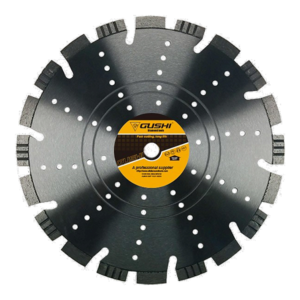
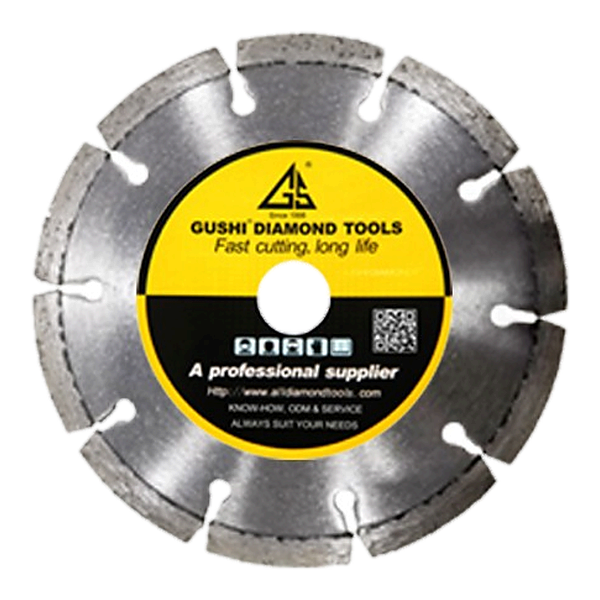
Workshops that cut steel and cast iron with bonded abrasive cut-off wheels lose time and money to wheels that wear out in dozens of cuts and can shatter without warning. Every changeover stops the job, and the shrinking wheel changes reach and leverage through the cut. The GUSHI laser diamond metal blade is built to remove that failure mode: a solid steel core carries diamond segments welded by laser, so the blade keeps both its diameter and its grip through 10,000 plus cuts.
The payoff is a blade that cuts rebar, angle iron, pipe and weld bead all day, throws fewer sparks and less dust than an abrasive wheel, and costs a fraction per cut of the wheel it replaces. For fabrication shops, steel erectors and demolition crews that burn through wheels daily, the laser diamond blade turns a recurring consumable into a near-set-and-forget tool.
Full Specifications
| Parameter | Specification |
|---|---|
| Product type | Laser-welded diamond metal cutting saw blade |
| Diameter range | 4 to 14 inch (105 to 350 mm) |
| Stock diameters | 105, 115, 125, 180, 230, 300, 350 mm (4, 5, 7, 9, 12, 14 inch) |
| Arbor / bore | 16 mm, 20 mm, 22.23 mm, 25.4 mm (reducer rings available) |
| Segment width | 2.0 mm |
| Segment height | 8 mm |
| Segment count | 9 segments (115 mm) to 23 segments (350 mm) |
| Core type | Solid steel wheel body, low run-out |
| Weld method | Laser welding, full-depth continuous seam, no brazing filler |
| Diamond grit | Medium grit engineered for ferrous metals |
| Cutting mode | Dry cutting standard; light mist optional for long cuts |
| Max RPM | 13,300 (115 mm) down to 4,400 (350 mm) – see size guide |
| Cutting depth | Approx. radius of the blade |
| Materials cut | Steel, cast iron, ductile iron, rebar, angle iron, sheet metal, welds |
| Machine fit | Angle grinder, chop saw, cut-off saw |
| Standards | ISO 9001, CE, EN13236 |
| MOQ | 50 pcs per size; mixed sizes accepted |
| Lead time | 25-30 days; stock items faster |
| OEM | Laser marking, custom packaging, bespoke sizes |
How It Works
Laser weld bond
The diamond segment is fused to the solid steel core by a focused laser beam that melts the two surfaces together into one continuous seam. There is no silver or copper brazing filler that can soften when the blade gets hot, so the joint survives the heat of dry cutting and the centrifugal pull at full RPM. This is the reason the segment stays attached for the whole working life.
Diamond segment action
The rim is built from a metal matrix holding industrial diamond grit. As the blade spins, the exposed diamonds cut the metal while the matrix wears back to expose fresh grit, a self-sharpening action that keeps the cut rate steady. Because the segment is only 2.0 mm wide, the kerf is thin and the cut is clean with little material wasted.
Why the segment never drops off
On a brazed blade the filler metal is the weak point: long dry cuts push it past its melt point and the segment can detach. The laser weld has no filler to melt, so detachment is removed from the failure list. Used within its marked maximum RPM, the blade keeps every segment until the diamond is fully consumed.
Key Features Explained
10,000 plus cuts per blade
Field use on mild steel shows 10,000 or more cuts from a single blade, about 300 times the life of a thin bonded cut-off wheel. For a fabrication shop that means far fewer changeovers, steadier output and a much lower cost per cut across a shift.
No wheel breakage
Bonded abrasive wheels wear to the centre and can shatter; the solid steel core of this blade keeps its strength and its original diameter to the end. Removing the shatter risk also removes a common workshop injury source tied to exploding cut-off wheels.
Less dust and fewer sparks
The blade shears a clean kerf instead of grinding the metal away, so airborne dust drops and the spark stream is smaller and cooler. That gives a cleaner bench, lower fire risk near flammables and less respiratory exposure, though eye, hand and dust protection still apply.
Constant diameter, better control
An abrasive wheel shrinks as it cuts, so reach and leverage change through the job. This blade holds its original diameter, which keeps control, depth and precision stable from the first cut to the last and avoids the sudden grab that a worn wheel can cause.
Selection & Size Guide
Pick the largest diameter your machine guards, then confirm the arbor and the maximum RPM printed on both the blade and the grinder. The figures below are typical maximum speeds and must be confirmed against the marking on the actual blade.
| Diameter | Typical machine | Typical max RPM | Cutting depth |
|---|---|---|---|
| 105 / 115 mm (4 inch) | 4.5 inch angle grinder | 13,300 | ~50 mm |
| 125 mm (5 inch) | 5 inch angle grinder | 12,200 | ~62 mm |
| 180 mm (7 inch) | 7 inch angle grinder | 8,500 | ~90 mm |
| 230 mm (9 inch) | 9 inch angle grinder | 6,600 | ~115 mm |
| 300 mm (12 inch) | Chop saw | 5,100 | ~150 mm |
| 350 mm (14 inch) | 14 inch cut-off saw | 4,400 | ~175 mm |
Applications & Materials
Materials it cuts
| Material | Typical use |
|---|---|
| Low / high carbon steel | Sections, bars, tubes, plate |
| Cast iron | Pipe, fittings, machine parts |
| Ductile iron | Utility and structural parts |
| Rebar and angle iron | Site cutting, steel frames |
| Sheet metal | Thin-gauge trimming |
| Hard-facing alloys | Wear-plate and overlay cuts |
| Weld beads | Weld removal and dressing |
| Bolts and fasteners | Cut-off and demolition |
Who uses it
Steel fabricators, construction and demolition crews, steel-structure erectors, automotive and equipment repair shops, and scrap and recycling yards. Anywhere a bonded cut-off wheel is burning through wheels, this blade cuts the changeover and the cost.
Laser Diamond Blade vs Bonded Abrasive Cut-off Wheel
| Dimension | GUSHI Laser Diamond Metal Blade | Bonded Abrasive Wheel | Winner |
|---|---|---|---|
| Blade life | 10,000 plus cuts | 30 to 50 cuts | Laser diamond |
| Wheel breakage risk | None (solid core) | High, can shatter | Laser diamond |
| Diameter retention | Constant to end of life | Shrinks as it wears | Laser diamond |
| Dust generation | Low | High | Laser diamond |
| Sparks | Few, cool | Heavy, hot | Laser diamond |
| Odor and fumes | None | Burning smell | Laser diamond |
| Cost per cut | Far lower at volume | High (frequent change) | Laser diamond |
| Materials covered | Steel, iron, rebar, cast | Softer metals only | Laser diamond |
| RPM safety | Stable laser weld | Shatter risk if overrun | Laser diamond |
The abrasive wheel still suits very occasional, low-budget cuts, but for any workshop cutting metal daily the laser diamond blade is cheaper per cut and safer to run.
How to Use
- Confirm the blade diameter, arbor and maximum RPM all match the grinder or saw nameplate.
- Fit the correct flange and tighten the nut to the maker’s torque; check the guard covers the disc.
- Mount the blade so the arrow on the core spins in the same direction as the machine.
- Seat the work piece firmly in a vice or clamp; never hold cut stock by hand near the cut line.
- Start the cut with light pressure; let the diamond do the work rather than forcing the blade.
- Keep the cut straight and avoid twisting the blade in the kerf, which stresses the core.
- For long cuts in thick steel, use a light water mist and pause to let the blade cool.
- After the job, spin the blade by hand to check for cracks or missing segment, and store it dry.
- Replace the blade when the segment reaches the wear limit or the core shows any damage.
Frequently Asked Questions
- What is a laser-welded diamond metal cutting blade and how is it different from a brazed blade?
- A laser-welded diamond blade fuses the diamond segment directly to the solid steel core with a high-energy laser beam, so there is no brazing filler metal to soften or fail under heat. A brazed blade relies on a silver or copper filler that can melt during long dry cutting and drop the segment. The laser weld holds through 10,000 plus cuts and at full RPM, which is why GUSHI specifies it for continuous steel and cast-iron work.
- What metals can the GUSHI laser diamond metal blade cut?
- It cuts low and high carbon steel, hard-facing alloys, ductile iron, grey cast iron, steel sections, bars and tubes, rebar, angle iron, bolts, sheet metal and weld beads. Typical jobs are cutting rebar on site, trimming steel structures, removing welds and slicing cast-iron pipe. It is built for ferrous metals; for stainless and aluminium use the matching GUSHI grade confirmed for that alloy.
- Can this laser diamond blade replace a bonded abrasive cut-off wheel?
- Yes, and most fabricators switch for the cost per cut. A bonded cut-off wheel gives roughly 30 to 50 cuts before it wears to nothing and can shatter; the GUSHI laser blade gives 10,000 plus cuts, keeps its original diameter, throws far fewer sparks and generates less dust. One blade often replaces 300 abrasive wheels, which also removes the wheel-breakage and shatter risk from the workshop.
- How many cuts does one laser diamond metal blade deliver?
- In typical mild-steel cutting on a 115 to 230 mm angle grinder, a single blade delivers 10,000 or more cuts before the segment is consumed, about 300 times the life of a thin bonded cut-off wheel. Cast iron and harder alloys reduce that figure, while light-gauge sheet metal extends it. Life depends on feed pressure, coolant use and whether the cut is interrupted or continuous.
- Can the diamond segment fly off during cutting?
- No. The segment is laser-welded to the steel core with a continuous, full-depth weld that withstands the heat of dry cutting and the centrifugal load at maximum RPM. Segment loss happens on poorly brazed blades when the filler melts; the laser weld has no filler to melt, so the segment stays attached for the full life of the blade when used within its rated speed.
- Should the metal cutting blade be used wet or dry?
- Dry cutting is standard and the blade is designed for it on angle grinders and chop saws. Dry use keeps the job mobile and avoids water near live power tools. For long continuous cuts in thick steel, a light water mist extends segment life and controls dust and heat; never flood a powered grinder. Always let the blade cool between heavy cuts.
- What diameters and arbor sizes are available?
- Diameters run 4 to 14 inch (105 to 350 mm): 4, 5, 7, 9, 12 and 14 inch are the stock sizes. Arbor holes are supplied in 16 mm, 20 mm, 22.23 mm and 25.4 mm to match angle grinders, chop saws and cut-off saws. Reducer rings adapt a 22.23 mm bore to a 20 mm spindle, so confirm your machine arbor before ordering.
- What maximum RPM must my grinder stay under?
- Never exceed the blade’s marked maximum RPM, which falls as diameter rises: about 13,300 RPM for 115 mm, 12,200 for 125 mm, 8,500 for 180 mm, 6,600 for 230 mm, 5,100 for 300 mm and 4,400 for 350 mm. These are typical figures; always confirm the exact number printed on the blade and on your grinder’s nameplate, and never fit a blade larger than the guard allows.
- Why does it produce less dust and fewer sparks than an abrasive wheel?
- Abrasive wheels grind the metal away and throw hot grit and sparks; the diamond blade shears a clean kerf so there is far less airborne dust and a smaller, cooler spark stream. That means a cleaner workstation, less respiratory exposure and lower fire risk near flammables. Still wear eye protection, gloves and a dust mask, and use extraction on enclosed jobs.
- How do I choose the right diameter for my grinder?
- Match the blade to the guard and spindle of the machine: 115 or 125 mm for a 4.5 to 5 inch grinder, 180 mm for a 7 inch grinder, 230 mm for a 9 inch grinder, 300 mm for a 12 inch chop saw and 350 mm for a 14 inch cut-off saw. Cutting depth equals roughly the radius, so a 230 mm blade cuts about 115 mm of steel. Pick the largest diameter your machine guards, then confirm RPM and arbor.
- Is the laser diamond metal blade certified and safe to use?
- Yes. GUSHI blades are made under ISO 9001 quality control and carry CE marking. The diamond product conforms to EN13236, the European safety standard for bonded abrasives and diamond tools that governs segment retention, markings and the technical file. Run the blade within its marked maximum RPM, keep the guard and flanges correct, and never stand in the plane of the disc.
- What is the minimum order quantity, lead time and OEM service?
- Standard MOQ is 50 pieces per size for stock specifications, with mixed-size orders accepted for distributors. Typical production lead time is 25 to 30 days after confirmation; stock items ship faster. GUSHI supports OEM and private label: custom laser marking, custom packaging and bespoke diameter, segment and arbor combinations, backed by a 100,000-piece-per-month diamond-tool capacity.