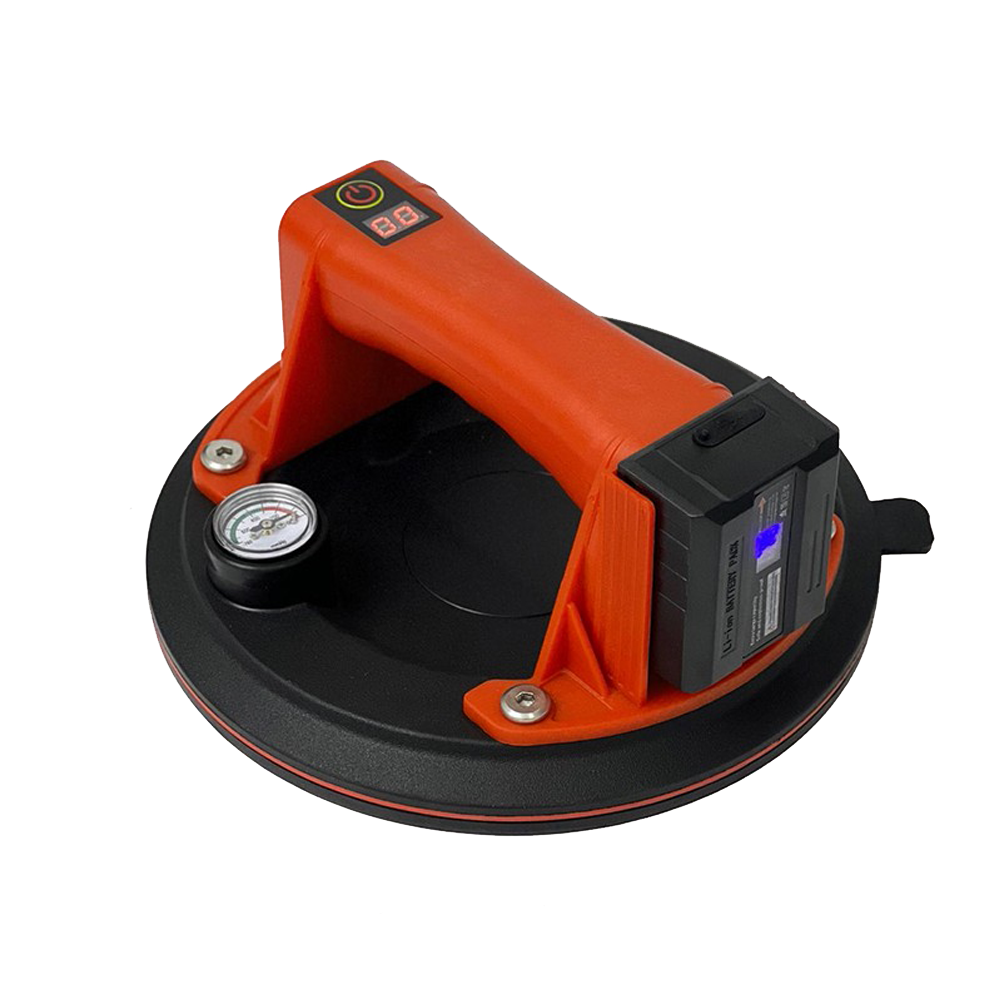
Product Overview

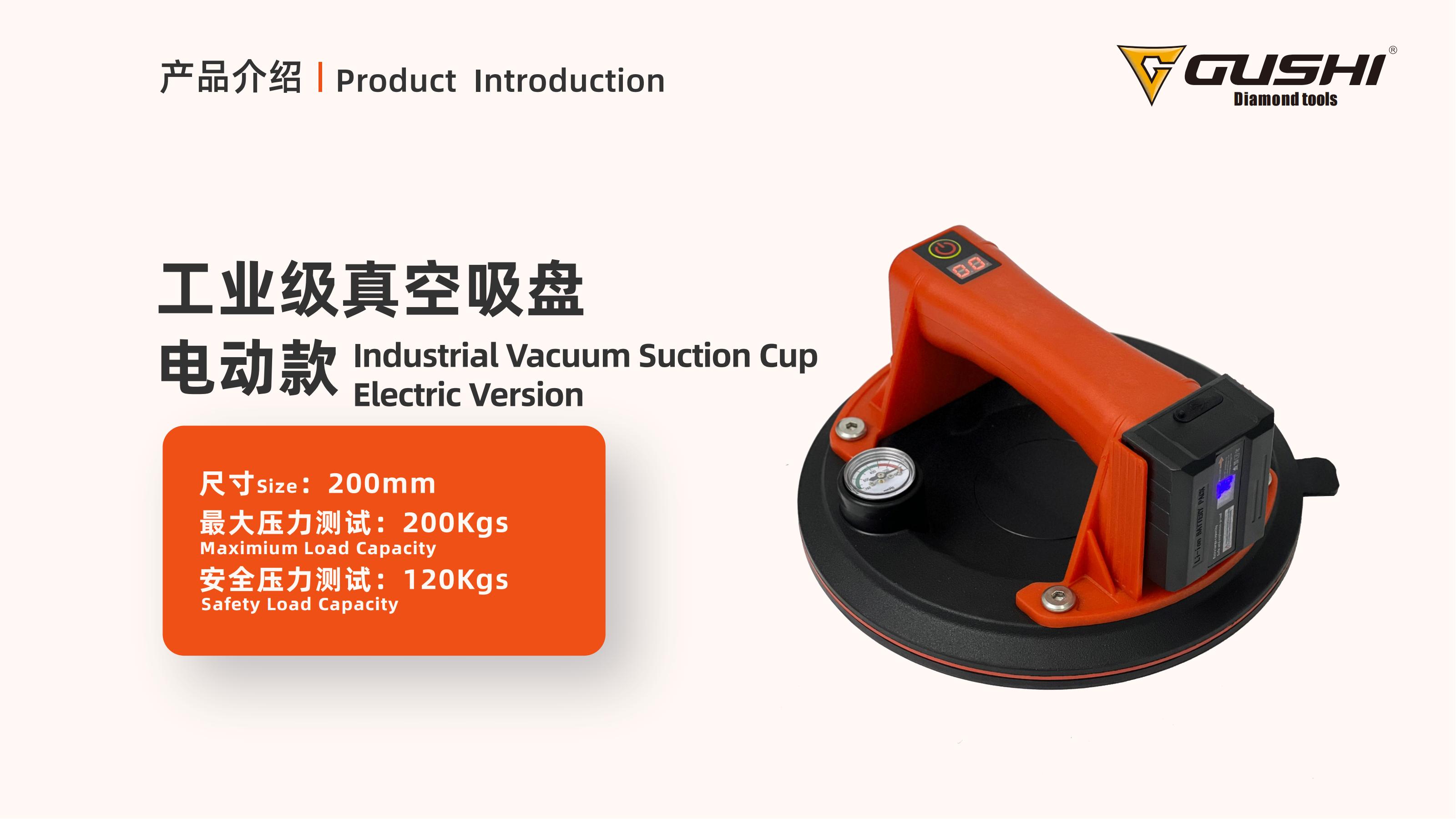
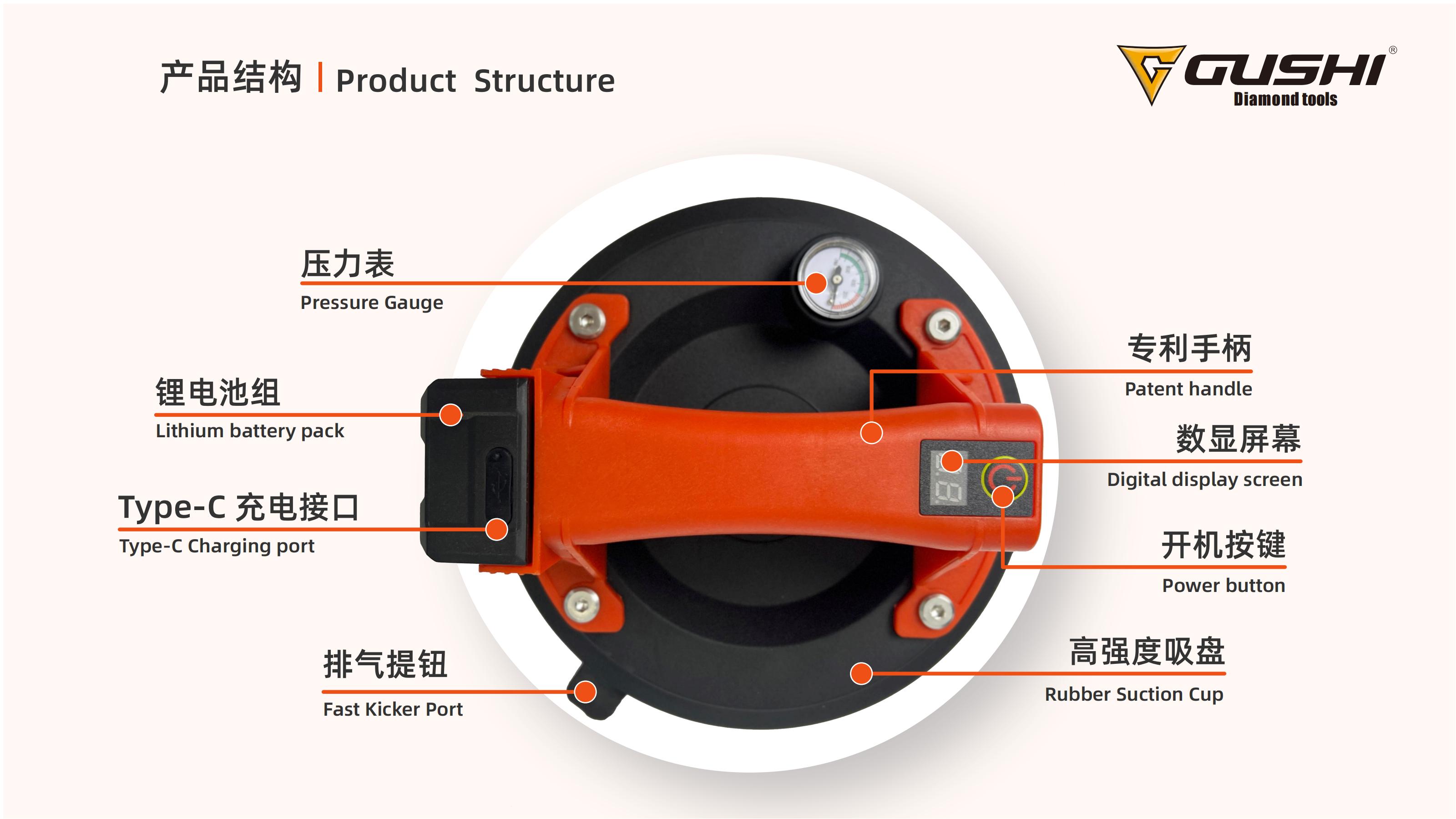
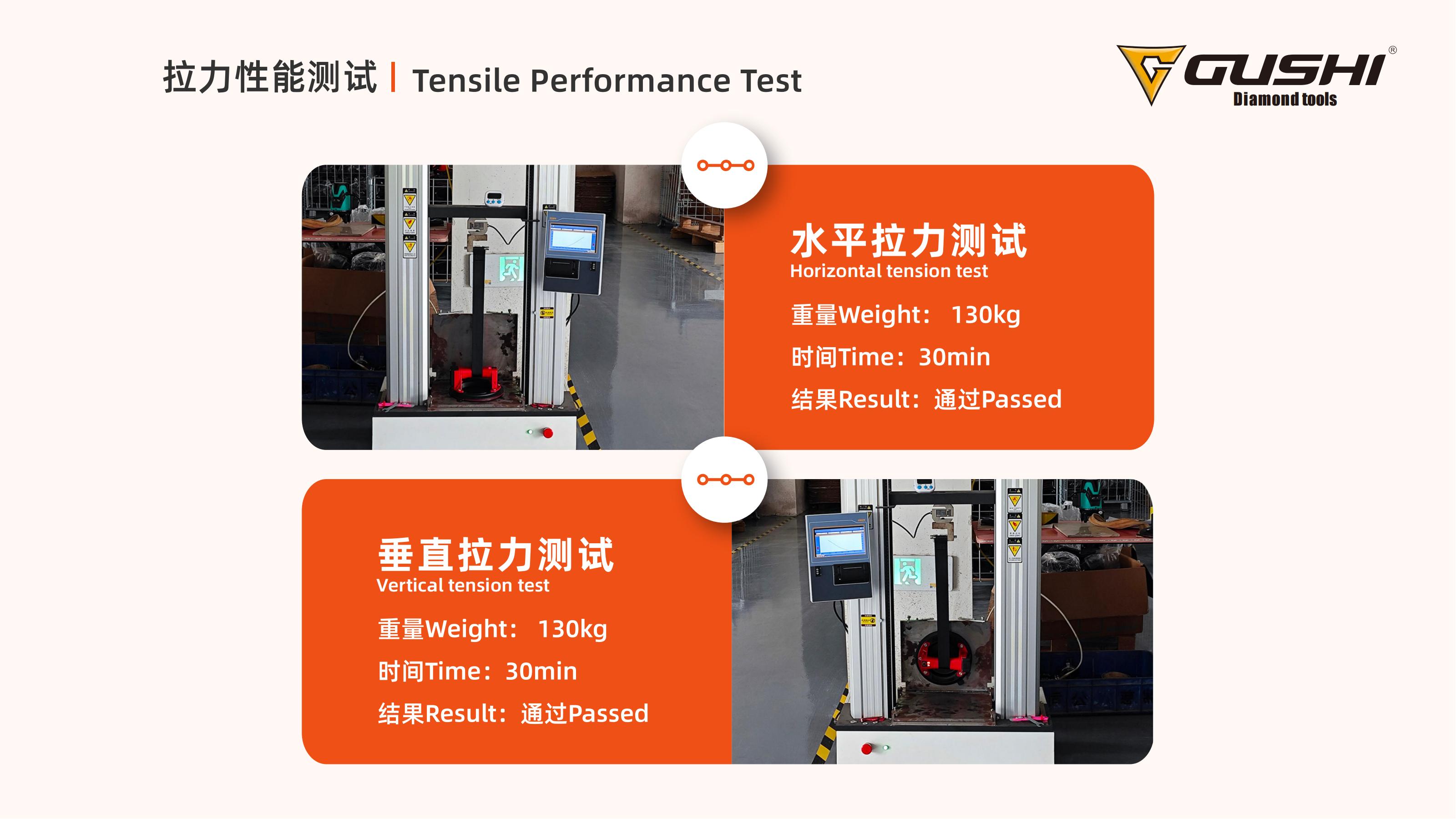

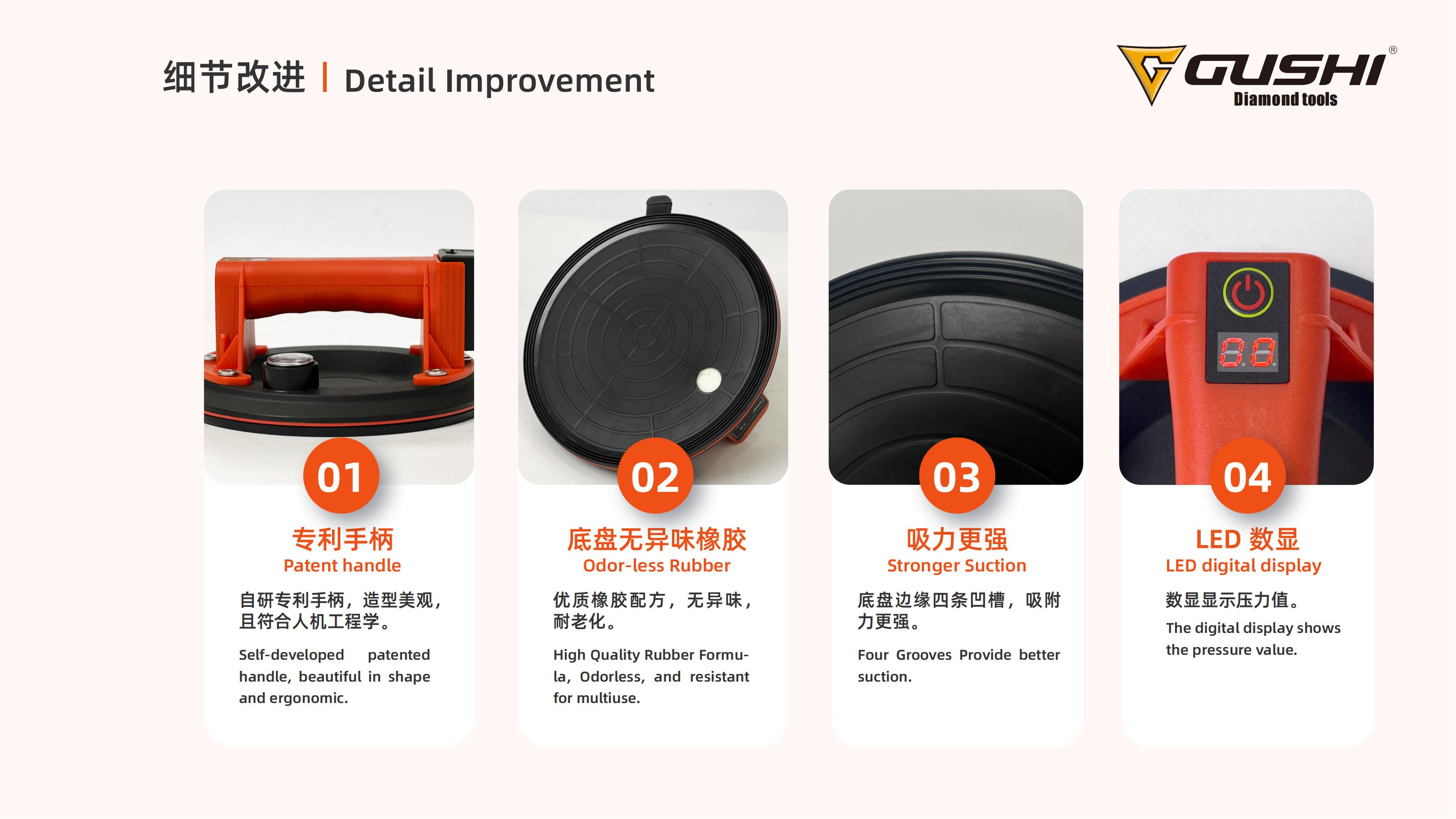
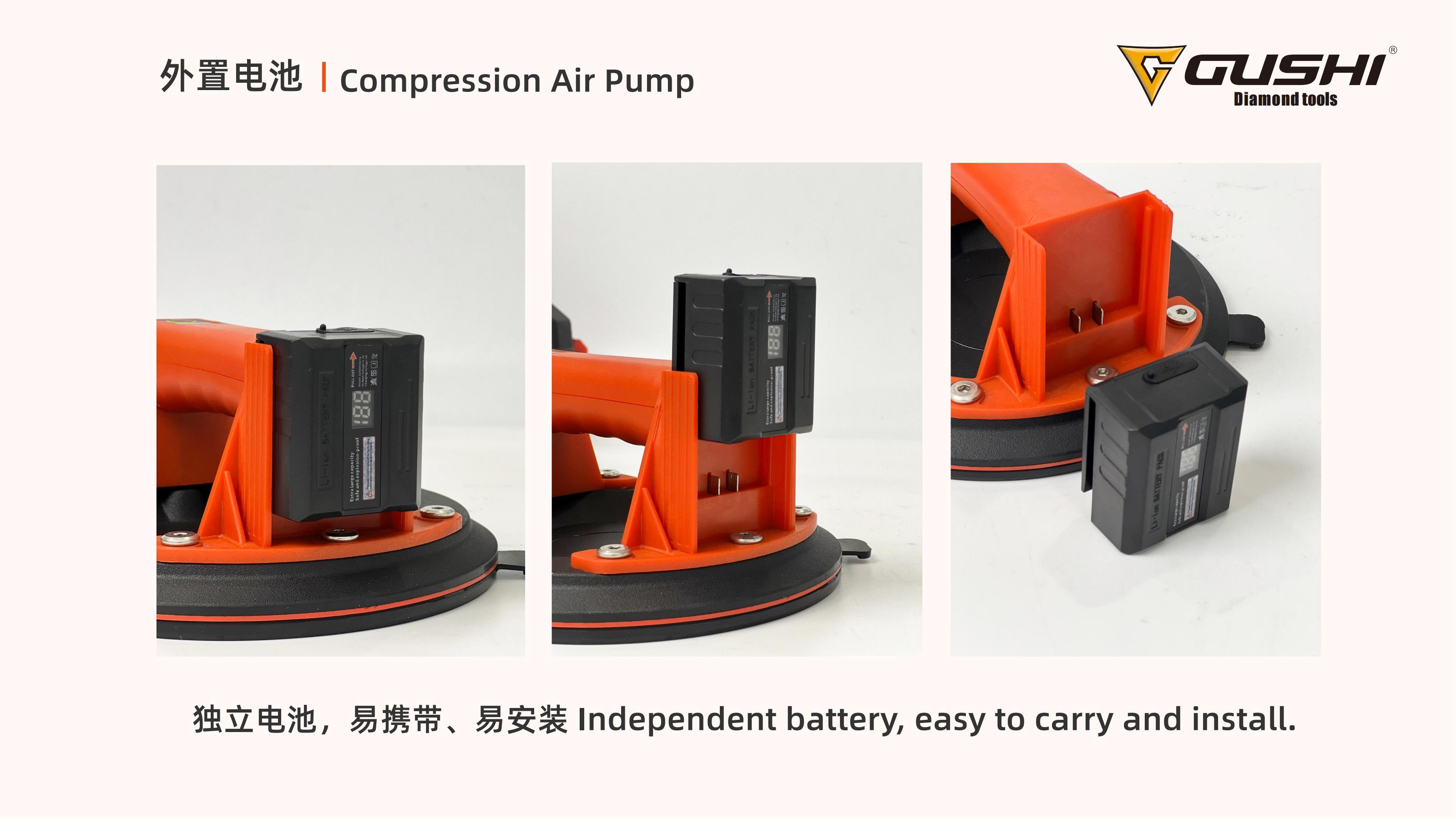
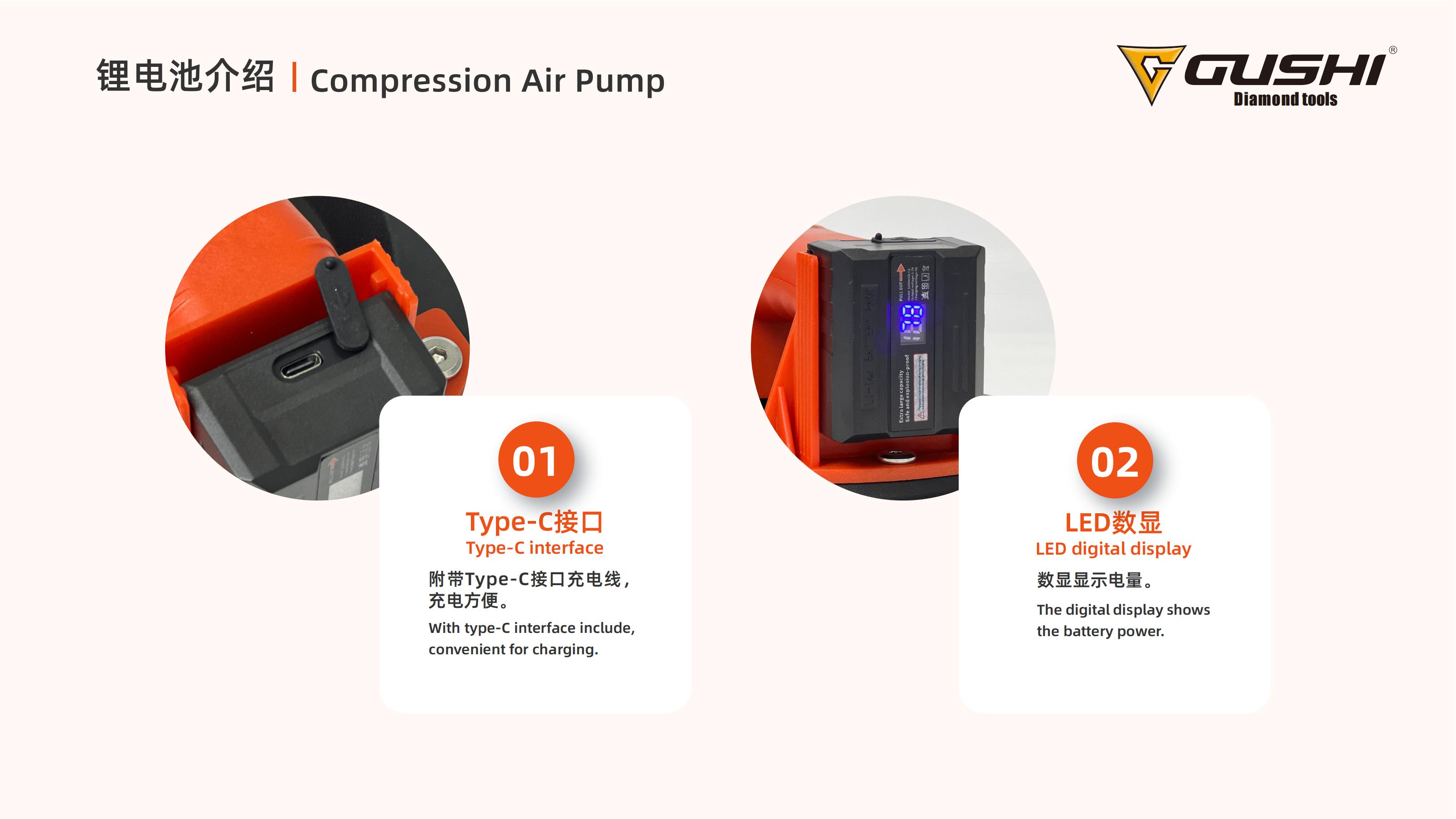
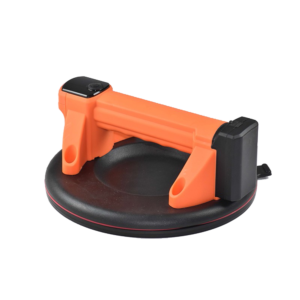
The GUSHI Electric Vacuum Suction Cup (SC-B002) is a battery-powered lifter with a 200 mm rubber pad and a safe vertical working load of 120 kg (265 lb). One button runs the micro-pump to about -70 kPa in 3–5 seconds, and an internal pressure sensor automatically re-pumps for 1–2 seconds whenever vacuum drops, so a panel stays attached through long positioning jobs without anyone touching the tool. The 7.4 V 1500 mAh lithium pack is externally hot-swappable, giving 3–5 days of normal site use per charge with a 2.5 hour recharge. It is made by Huzhou Gu’s Imp. & Exp. Co., Ltd., a Zhejiang manufacturer founded in 2004, ISO 9001:2015 and CE certified, exporting to more than 20 countries with 100% inspection before shipment.
This is the model for crews who have outgrown hand pumping but do not need the 220 kg flagship. Where a manual cup asks the operator to remember to check the indicator every 30 minutes, this one watches the vacuum itself: the pump restarts the moment pressure falls, which is what keeps a large-format porcelain slab secure while it is being aligned, shimmed and pressed home.
It sits deliberately between two siblings in the GUSHI range. Below it, the manual SC-A001 hand-pump cup needs no battery and costs a fraction of the price, which still makes it the right spare tool and the right choice for intermittent work. Above it, the GSH-DSC210 digital suction cup steps up to a 210 mm double-layer PA6 and rubber pad, a 220 kg rating, a large LCD readout and an automatic cleaning cycle for daily work on matte and lightly textured porcelain. Choosing between them comes down to how many lifts a day you make and how smooth the material is.
Full Specifications
| Parameter | Specification |
|---|---|
| Product name | Electric Vacuum Suction Cup with Battery |
| Model | SC-B002 |
| Type | Battery-powered vacuum lifter with automatic pressure maintenance |
| Suction pad diameter | 200 mm (8 in) |
| Pad construction | Single-layer thickened rubber, non-marking |
| Safe vertical working load | 120 kg (265 lb) |
| Maximum horizontal (shear) load | 180 kg |
| Working vacuum level | ≈-70 kPa reached in 3–5 seconds |
| Auto re-pump threshold | Restores vacuum when pressure falls below the safe limit |
| Theoretical pull-off force | ≈2,200 N at -70 kPa (≈224 kgf) |
| Safety factor (rated vs theoretical) | ≈1.8:1 |
| Battery type | Lithium-ion, externally replaceable, tool-free hot-swap |
| Battery capacity | 1500 mAh |
| Output voltage | 7.4 V DC |
| Power consumption | ≈3.0 W |
| Charging time | ≈2.5 hours (full charge) |
| Battery life | 3–5 days at 2–4 hours of daily use (≈150–200 pump cycles) |
| Display / feedback | LED vacuum indicator bar + LED battery status |
| Control scheme | One-button start, one-button release |
| Release mechanism | Electric release valve plus manual override |
| Check valve | Holds vacuum when the pump is off or the battery is removed |
| Housing material | ABS engineering plastic with rubber over-grip |
| Operating temperature | -10 °C to +50 °C |
| Surface compatibility | Flat, smooth, clean, non-porous |
| Net weight (with battery) | ≈1.1 kg |
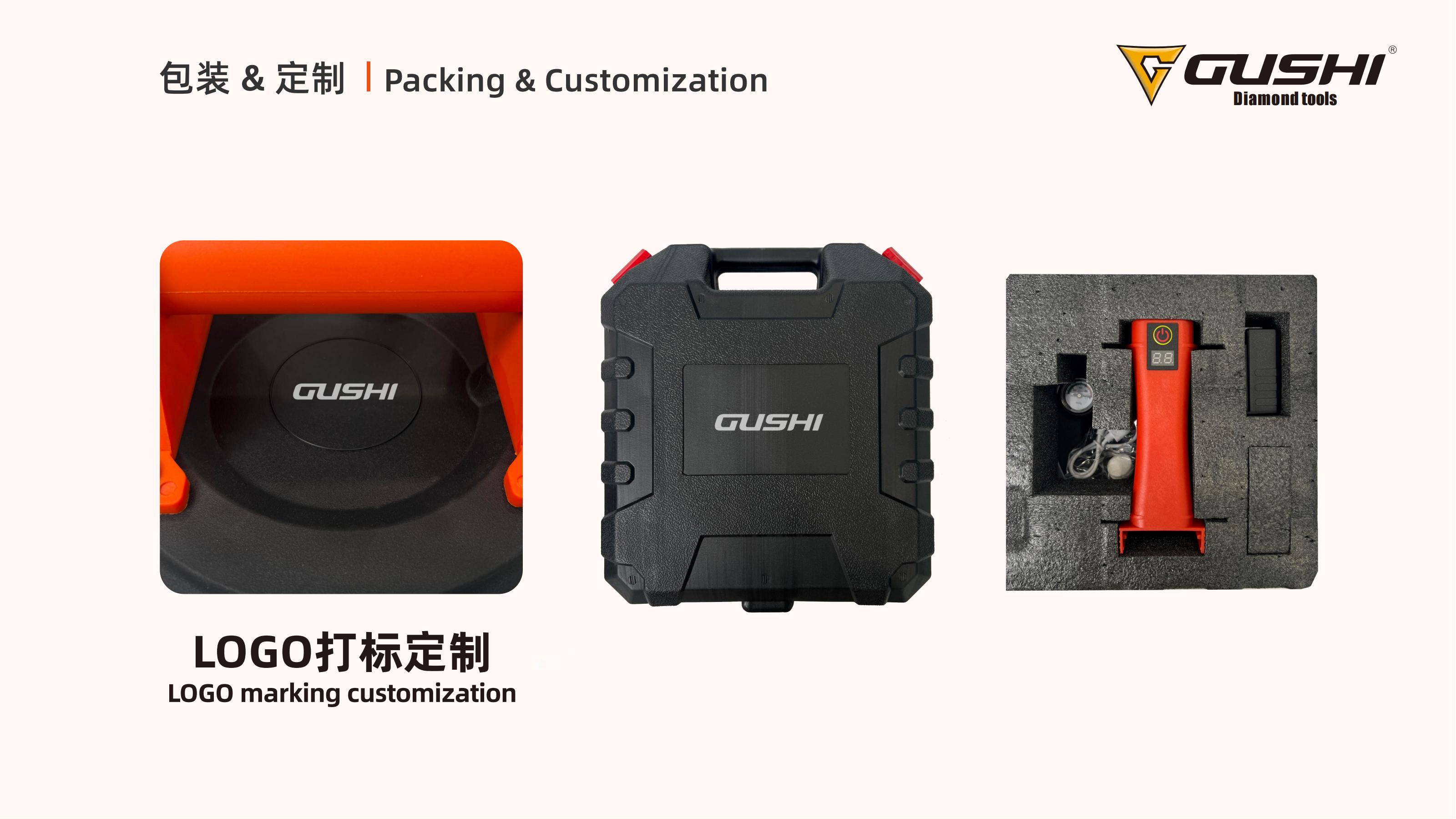
| Packing | 1 pc colour box; 8 pcs/outer carton |
| Compliance | CE, UN38.3 (battery transport), RoHS-compliant materials |
| Certifications | ISO 9001:2015, CE, SGS inspected |
| MOQ | 100 units |
| Lead time | 7–15 days stock; 25–35 days OEM |
How the Automatic Vacuum System Works
The first evacuation
One press starts the micro-pump, which draws air out of the chamber between the rubber pad and the panel. On a clean, flat surface the pump reaches roughly -70 kPa within 3 to 5 seconds, then stops on its own. At that level a 200 mm pad — about 314 cm² of contact area — develops around 2,200 N of holding force, the equivalent of about 224 kg of pull-off.
Why 120 kg is the rating, not 224 kg
Pull-off force is a laboratory number measured on perfect glass with a static load. Real work adds imperfect surfaces, footfall vibration, tilting while walking and the leverage created by a large panel. Applying a safety factor of about 1.8 to the theoretical 224 kg gives the 120 kg safe vertical working load — the number crews should plan against, and the number we print on the product.
Closed-loop pressure maintenance
Air always seeps back through microscopic gaps under the seal, faster on matte or slightly textured material. A pressure sensor tracks that continuously: when vacuum falls below the safe threshold, the pump restarts for 1 to 2 seconds and restores it. The operator sees the LED indicator recover rather than discovering a loosening panel — the single biggest practical difference between an electric cup and a manual one.
The check valve and hot-swap workflow
The vacuum is held by a one-way check valve, not by the motor, so the load stays gripped while the pump is idle or the battery is out. That makes battery changes safe mid-task: set the panel down or keep it steady, slide the pack off, slide a charged one on in under 10 seconds, and continue. Release is either by the electric valve or the manual override if the battery is flat.
Key Features Explained
One-button attachment
There is no hand pumping and no stroke counting. Press once, wait three to five seconds, and the tool tells you when it has full vacuum. On jobs with dozens of lifts a day that removes both the effort and the variability between operators — every attachment starts at the same pressure instead of depending on how firmly someone pumped.
Automatic pressure maintenance
The sensor-and-pump loop is what protects expensive material. A 1200 × 600 mm porcelain slab can cost US$50–200; the cup that quietly loses grip halfway through positioning costs that slab plus the labour. Automatic re-pumping is the reason professional glazing and large-format crews move to electric models in the first place.
Hot-swappable external battery
The pack mounts outside the housing and comes off without tools in under 10 seconds, so a spare on the charger means zero downtime. Three to five days of normal use per charge and a 2.5 hour recharge mean that in practice the tool is charged overnight rather than managed during the day.
200 mm single-layer rubber pad
The pad is sized to spread 120 kg over about 314 cm² so the load does not crack or stress the panel, and the non-marking compound leaves no residue on glass, polished stone or painted metal. It is optimised for smooth, sealed surfaces; where the material is matte or lightly textured, the double-layer model is the better tool.
LED feedback and safe release
An LED bar shows vacuum status and a second indicator shows battery state, so the two things that matter are visible at a glance. Release is one button, with a manual override valve that works even with a flat battery — and because the check valve holds the load, the tool never becomes a hazard when power runs out.
Selection Guide: Electric or Manual?
The honest answer depends on how many lifts a day your crew makes and what the material is. Use this table to place yourself.
| Working pattern | Recommended tool | Why |
|---|---|---|
| Under 20 lifts a day, mixed small jobs | Manual SC-A001 | No charging, lowest cost, always ready — the ideal spare tool |
| 20–80 lifts a day on smooth tile and glass | Electric SC-B002 (this model) | One-button speed with automatic vacuum maintenance at mid-range cost |
| All-day glazing, 220 kg panels, long positioning | Digital GSH-DSC210 | 220 kg rating, LCD readout, double-layer pad tolerates rougher surfaces |
| No reliable power or charging on site | Manual SC-A001 | Battery-free operation has no dependency at all |
| Matte, slightly textured or micro-beveled porcelain | Digital GSH-DSC210 | Double-layer PA6 + rubber pad holds where single-layer pads leak |
| Battery planning | Guidance |
|---|---|
| Runtime per charge | 3–5 days at 2–4 hours daily use (≈150–200 pump cycles) |
| Full recharge | ≈2.5 hours — charge overnight or at lunch |
| Spare battery policy | One spare per two tools for full-day production work |
| Signs of a tired pack | Pump runs more often, LED drops quickly, charge no longer lasts a full day |
Applications & Suitable Materials
Applications
| Application | Why electric wins here | Setup |
|---|---|---|
| Large-format porcelain panel installation | Automatic vacuum holds the slab during slow, precise alignment | 1 cup per 120 kg, 2 cups for panels over 1.5 m |
| Glass handling and glazing | One-button attach speeds up repetitive pane moves | 1–2 cups, vertical carry |
| Kitchen and bathroom fit-out in occupied homes | Quiet, clean operation with no hand pumping in tight spaces | 1 cup |
| Stone countertop and vanity tops | Steady hold while the slab is levelled and scribed | 2 cups for slabs over 1.5 m |
| Commercial tiling contracts | Reduces operator fatigue across hundreds of daily lifts | 1 cup per installer + 1 spare battery |
| Mirror, shower screen and glass door fitting | Non-marking pad, precise one-hand positioning | 1 cup |
| Appliance and sheet metal handling in workshops | Instant attach/release cycle for repetitive production work | 1 cup, optional 2-cup bar |
Suitable Materials
| Holds reliably | Reduce load / use another tool |
|---|---|
| Float, tempered and laminated glass | Matte or lightly textured porcelain — reduce load 30–50% |
| Glazed ceramic and polished porcelain tile | Micro-beveled or structured tile — use double-layer model |
| Polished granite, marble and engineered quartz | Honed, flamed or bush-hammered stone — use a clamp |
| Stainless steel and painted sheet metal | Raw concrete, brick and blockwork — no vacuum possible |
| Acrylic, polycarbonate and finished panels | Wet, oily or dusty surfaces of any material |
Electric SC-B002 vs. Manual vs. Digital Flagship
Three tools from the same GUSHI range, aimed at three different working patterns.
| Dimension | Electric SC-B002 (this model) | Manual SC-A001 | Digital GSH-DSC210 |
|---|---|---|---|
| Attach effort | ✓ One button, 3–5 s | 3–6 hand strokes | ✓ One button, 3–5 s |
| Vacuum maintenance | ✓ Automatic re-pump | Manual re-pump by hand | ✓ Automatic with LCD readout |
| Safe load | 120 kg | 60–150 kg by pad size | ✓ 220 kg |
| Pad design | 200 mm single-layer rubber | 120/160/200 mm rubber | ✓ 210 mm double-layer PA6 + rubber |
| Surface tolerance | Smooth, non-porous | Smooth, non-porous | ✓ Also slightly rough and matte |
| Grip feedback | LED indicator bar | Red-line indicator | ✓ LCD: vacuum + battery + mode |
| Power dependency | Battery, hot-swappable | ✓ None | Battery, hot-swappable 2000 mAh |
| Runtime | 3–5 days per charge | ✓ Unlimited | 5–7 days per charge |
| Net weight | 1.1 kg | ✓ 0.9–1.5 kg | 1.2 kg |
| Automatic cleaning cycle | No | n/a | ✓ Triple-tap dust purge |
| Price per unit | ✓ US$35–90 | US$3–18 | US$45–120 |
| Best for | Daily lifting on smooth panels at mid-range cost | Intermittent work, no-power sites, backup tool | All-day large-format work and rougher surfaces |
Bottom line: Step up to the SC-B002 when hand pumping starts slowing the crew down — roughly 20 or more lifts a day. Stay with the manual cup for intermittent work and as a power-free backup. Move to the GSH-DSC210 when panels exceed 120 kg, surfaces are less than perfectly smooth, or operators want a numeric vacuum readout before every lift.
How to Use: Step-by-Step Guide
- Charge the battery before the first shift (≈2.5 h) and check the LED shows full.
- Inspect the rubber pad: no cuts, no embedded grit, no permanent flat spots.
- Clean and dry the panel surface — the pad needs a smooth, non-porous, dust-free area.
- Confirm the load: ≤120 kg vertical, ≤180 kg horizontal, less on imperfect surfaces.
- Place the cup flat on the panel, at the centre of gravity or at the quarter points with two cups.
- Press the start button once; the pump runs and stops by itself at full vacuum in 3–5 seconds.
- Wait for the LED vacuum indicator to confirm full suction before any lifting movement.
- Do a 5 cm test lift and hold; if the LED drops or the pump restarts immediately, reposition.
- Lift and carry smoothly, keeping the panel vertical where possible and the load close to the body.
- Watch the indicator during long positioning — occasional 1–2 second pump bursts are normal.
- Press the release button to break the vacuum, or use the manual release valve if the battery is flat.
- Hot-swap the battery when the LED shows low, wipe the pad clean, and store the tool dry.
Related tools for panel handling and installation: Manual Vacuum Suction Cup SC-A001, G-Ultra Lifter, and 2-in-1 Tile Vibration Machine.
Preguntas frecuentes
How long does the battery last and how long does it take to charge?
The 7.4 V 1500 mAh lithium pack gives 3 to 5 days of normal site use at 2-4 hours per day, which is roughly 150 to 200 pump cycles per charge. A full recharge takes about 2.5 hours. The battery is mounted externally and can be hot-swapped without tools in under 10 seconds, so keeping one spare on the charger removes downtime entirely.
What happens if the battery runs out while a panel is attached?
The vacuum is held by a check valve, not by the pump, so the cup keeps its grip when the battery is flat or removed. The panel stays attached and you can still release it with the manual release valve. Never leave a load hanging unattended: set it down, then swap the battery or move to a manual cup.
How much weight can the electric suction cup lift?
The safe vertical working load is 120 kg (265 lb) and the horizontal or shear load up to 180 kg, measured on clean, flat, non-porous surfaces. A 200 mm pad at -70 kPa develops about 2,200 N of theoretical force, roughly 224 kgf, so the 120 kg rating keeps a safety factor near 1.8. Reduce the expected load by 30 to 50 percent on any surface that is not perfectly smooth.
Does it maintain the vacuum automatically?
Yes. A pressure sensor monitors the chamber continuously and the micro-pump restarts for 1 to 2 seconds whenever vacuum falls below the safe threshold, restoring full suction without touching the tool. This is the main advantage over a manual cup: the panel stays secure through long positioning jobs instead of slowly losing grip.
What is the difference between this model and the GSH-DSC210 digital suction cup?
SC-B002 is the mid-range electric model: 200 mm single-layer rubber pad, 120 kg load, LED indicator bar, 1500 mAh battery and a lower price of about US$35 to 90. The GSH-DSC210 is the flagship: 210 mm double-layer PA6 plus rubber pad, 220 kg load, large LCD showing vacuum and battery, automatic cleaning cycle and a 2000 mAh battery at about US$45 to 120.
Can it be used on slightly rough or textured tiles?
The single-layer rubber pad needs a smooth, sealed surface: glass, glazed ceramic, polished stone, metal and finished panels. On matte, lightly textured or micro-beveled porcelain it will lose vacuum faster, so either reduce the load by 30 to 50 percent or step up to the double-layer GSH-DSC210, whose PA6 outer layer holds on surfaces where single-layer pads fail.
Can the product be shipped with the battery included?
Yes. The pack is UN38.3 certified for transport and we supply MSDS and battery documentation for air and sea freight. Orders can also ship battery-free with batteries packed separately or sourced locally, depending on your market’s import rules and your own compliance preference.
What is the MOQ, warranty and lead time?
The OEM MOQ is 100 units with mixed models allowed in one order. Every unit is inspected before shipment under our ISO 9001:2015 system, and we remain responsible for the supplied product throughout its service life. Lead time is 7 to 15 days for stock models and 25 to 35 days for OEM orders, shipped from Shanghai or Ningbo.
OEM & Wholesale Information
| OEM / wholesale parameter | Details |
|---|---|
| MOQ | 100 units; electric and manual models can be mixed in one order |
| Customisation | Housing colour, logo printing, pad compound and diameter, packaging artwork, manual language |
| Battery options | Ship with battery, battery-free, or separate spare packs; UN38.3 and MSDS provided |
| Charger options | EU, US, UK and AU plugs; USB-C or barrel connector on request |
| Packing | 1 pc colour box, 8 pcs/outer carton; private-label artwork supported |
| Spare parts programme | Pads, batteries, chargers and valve assemblies supplied with OEM orders |
| Sample policy | Samples at cost price plus freight; fee refunded on the official order |
| Payment terms | L/C, T/T, Western Union, PayPal |
| Port of loading | Shanghai or Ningbo, China |
| Quality control | 100% inspection before shipment; ISO 9001:2015, CE, SGS |
Huzhou Gu’s Imp. & Exp. Co., Ltd. (brands GUSHI Tools and Roycel) has manufactured and exported tile installation and material handling tools from Zhejiang since 2004, supported by a supply chain built in this industry since 1998. The company holds ISO 9001:2015 and CE certification, exports to more than 20 countries including the USA, Germany, the UK, the Netherlands, Brazil, Chile and Australia, and is one of the 23 Chinese exporters that won the US anti-dumping case on diamond blades at a 6.2% rate.
Continue through the suction cup range: 8-Inch Digital Suction Cup (210 mm), Double Layer Integrated Digital Suction Cup, and Manual Vacuum Suction Cup SC-A001.