Product Overview
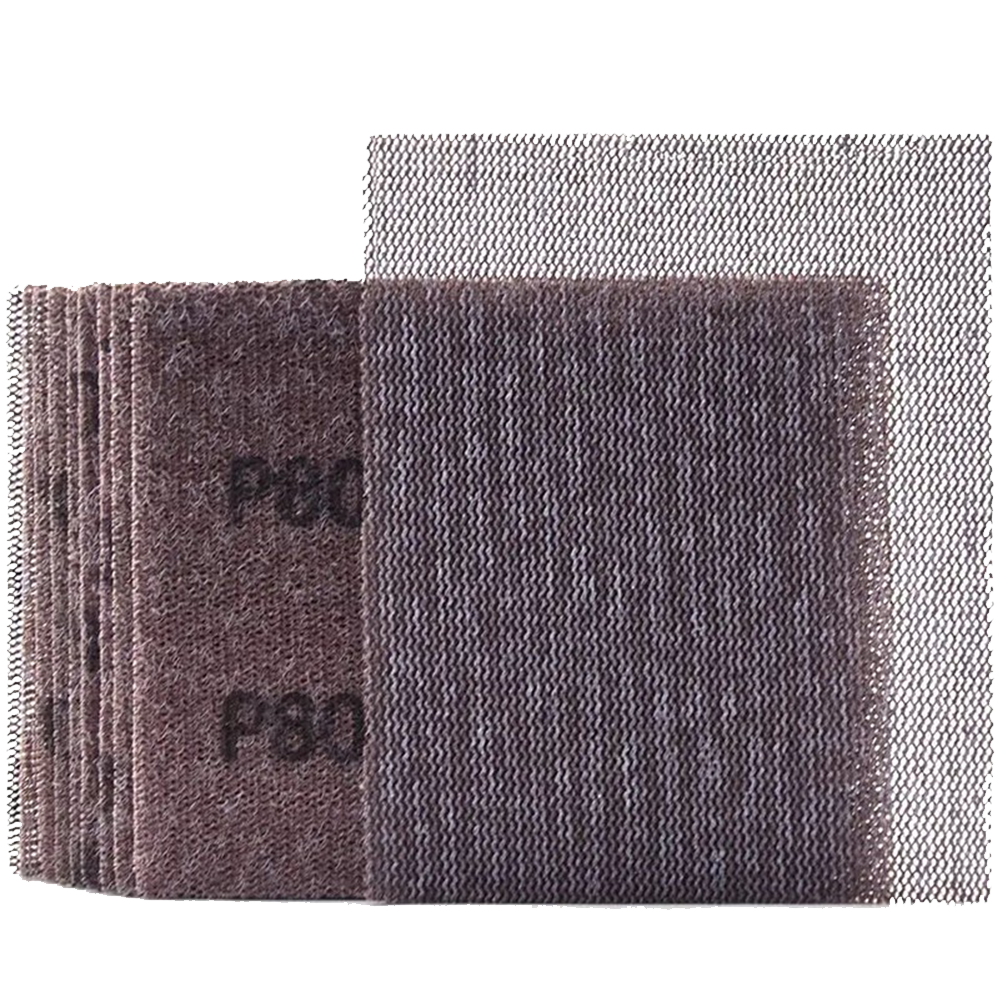
GUSHI Diamond Sanding Sheets are flexible diamond abrasives for hand finishing materials that defeat conventional paper. Electroplated nickel-bond sheets in 60# to 400# grit handle aggressive shaping, chip repair and edge smoothing; resin-bond sheets in 800#, 1500# and 3000# grit hone and polish afterwards. An open dot pattern keeps the sheet flexible and clears swarf, and because the abrasive is diamond there is no pigment to bleed into light stone. Sizes are 55 × 90 mm, 100 × 100 mm and 120 × 180 mm, the sheets work wet or dry, and they typically last 10 to 30 times longer than silicon carbide paper. They are made by Huzhou Gu’s Imp. & Exp. Co., Ltd., a Zhejiang diamond tool and abrasives manufacturer founded in 2004 that is ISO 9001:2015 certified and exports to more than 20 countries.
Diamond is not simply a finer abrasive, it is a different class of one. At Mohs 10 it cuts granite, engineered stone, porcelain and glass rather than wearing against them, so the sheet removes material steadily instead of glazing over. That is why a single diamond sheet can finish an edge that would consume a stack of conventional paper.
The two bond types exist because coarse and fine work need opposite behaviour. Electroplating anchors a single layer of diamond in nickel, leaving maximum grain exposure for fast, aggressive cutting. Resin embeds finer diamond in a softer matrix that yields slightly, which is what produces a polished rather than a scratched surface. Used in sequence, they cover the whole job from a chipped edge to a final gloss.
Full Specifications
| Parameter | Specification |
|---|---|
| Product name | Diamond Sanding Sheets (flexible diamond polishing sheets) |
| Abrasive | Industrial diamond, Mohs 10 |
| Bond types | Electroplated nickel (coarse) / resin (fine) |
| Grit range — electroplated | 60# / 100# / 120# / 200# / 400# |
| Grit range — resin | 800# / 1500# / 3000# |
| Extended electroplated range | 30#–600# on request |
| Standard sizes | 55 × 90 mm, 100 × 100 mm, 120 × 180 mm |
| Custom sizes | Available to order |
| Surface pattern | Open dot pattern for flexibility and swarf clearance |
| Backing | Flexible cloth; velcro or foam-backed options |
| Sheet thickness | ≈0.5–0.8 mm (foam-backed version thicker) |
| Can be cut | Yes — scissors or shears for tight areas |
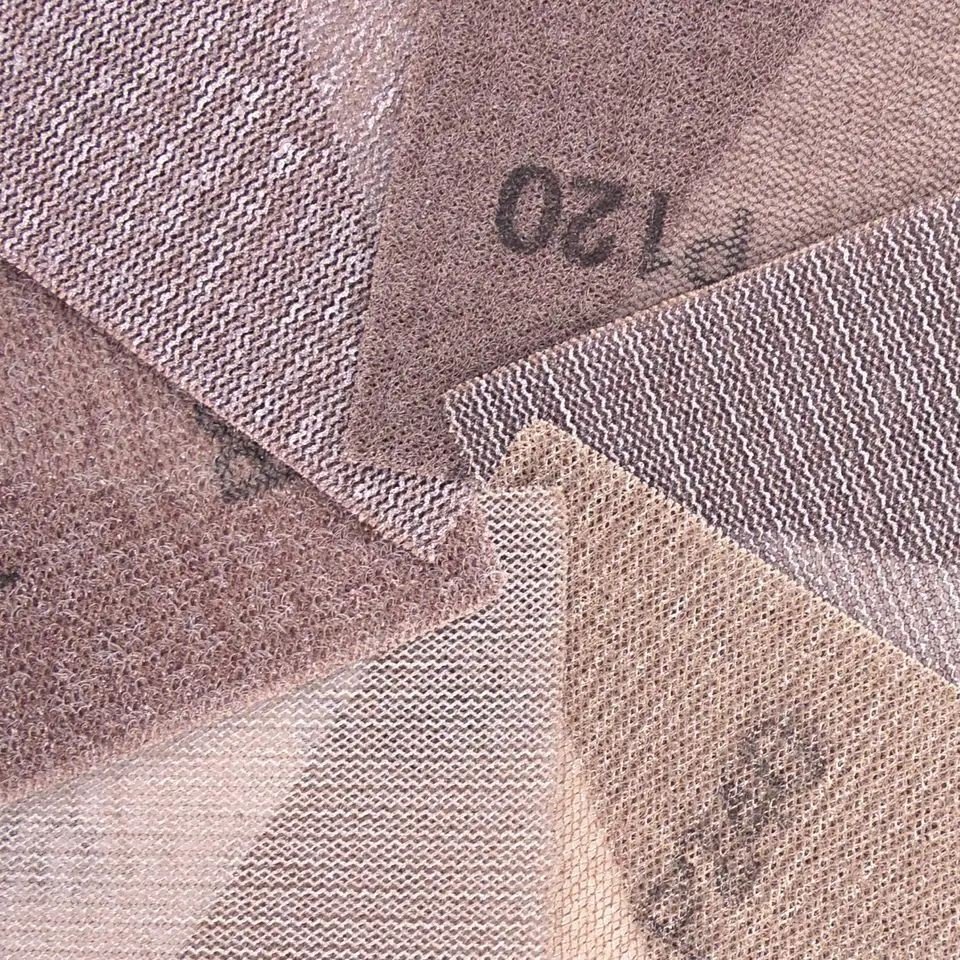
| Colour coding | 60 green · 100/120 black · 200 red · 400 yellow · 800 white · 1500 blue · 3000 orange |
| Use mode | Wet and dry |
| Dye transfer | None — no pigment to bleed into stone |
| Life vs silicon carbide paper | ≈10–30× longer on hard material |
| Standard set | 7 pieces: 4 electroplated + 3 resin |
| Suitable materials | Granite, marble, engineered stone, glass, porcelain, ceramic, concrete, terrazzo, gemstones, soft stone |
| Application method | Hand use, sanding block, or velcro backing pad |
| Packing | 10 pcs/pack; 200 pcs/carton (size dependent) |
| Shelf life | ≈24 months stored dry at room temperature |
| Quality system | ISO 9001:2015; 100% inspection before shipment |
| Material compliance | RoHS-compliant materials |
| MOQ | 500 pcs (sizes, grits and bonds mixable) |
| Lead time | 5–10 days standard; 15–30 days custom |
| Payment terms | T/T, L/C, D/A, D/P, PayPal |
How Diamond Sheets Cut Hard Material
Cutting rather than rubbing
Conventional abrasives such as silicon carbide work by scratching, and on materials harder than the grain they stop scratching and start rubbing. Diamond is harder than granite, quartz and glass, so it keeps cutting. The practical difference is that the sheet removes material at a steady rate from first contact to the end of its life, instead of the rapid decline seen with ordinary paper on dense stone.
Why the dot pattern matters
A continuous diamond coating would be stiff and would clog within seconds. The open dot pattern leaves gaps between the diamond islands: the sheet stays flexible enough to follow a curve or a bullnose edge, and swarf and water escape through the gaps instead of packing the surface. Flexibility and clogging resistance come from the same design feature.
Exposure and why the bond changes with grit
Electroplating holds each diamond particle in nickel with most of the grain exposed, which is what makes coarse sheets so aggressive — but that same exposure leaves a scratch pattern too coarse to polish with. Resin holds finer diamond in a matrix that wears back slightly during use, keeping grit exposure low and controlled, which is exactly what produces a honed and then polished surface.
Heat is still the enemy
Diamond conducts heat well, but the bond does not. Overheating a resin sheet softens the matrix and sheds diamond prematurely; overheating glass or engineered stone can crack or discolour it. Water is not optional on fine work — it carries heat and swarf away and is the single biggest factor in both sheet life and finish quality.
Key Features Explained
High grinding efficiency
Because the exposed diamond cuts continuously, these sheets remove stock faster than any conventional abrasive at the same grit. On a chipped countertop edge or a badly scratched glass panel, that translates directly into less time per repair and fewer sheets consumed per job.
No dye left on the surface
Some abrasive papers and pads use coloured pigments or minerals that can bleed into pale stone, leaving a stain that has to be ground out — a costly problem on white marble, onyx and light engineered stone. Diamond carries no pigment, so there is nothing to transfer. This is one of the most valued properties of diamond sheets on light-coloured material.
Flexibility for real geometry
The sheet folds around a bullnose, follows an internal radius and reaches into corners that a rigid pad cannot. Cut with scissors to a smaller shape when needed, it handles the awkward geometry that makes up most on-site repair work rather than only flat panels.
Long service life
Anchored in metal or resin rather than glued to paper, diamond grains stay in place. Sheets typically last 10 to 30 times longer than silicon carbide paper on hard material, which more than offsets the higher unit price and reduces the number of consumables a crew has to carry.
Wet or dry flexibility
Wet is recommended for dust control, cooling and finish quality, but dry use is entirely practical for quick touch-ups and small repairs where water is inconvenient. The same sheet does both, so a single stock covers workshop and site work.
Grit Sequence and Colour Coding Guide
The standard seven-piece progression, with the conventional colour coding used across the industry.
| Stage | Grit | Bond | Colour | Purpose |
|---|---|---|---|---|
| 1 | 60# | Electroplated | Green | Aggressive shaping, levelling chips and deep scratches |
| 2 | 100# / 120# | Electroplated | Black | Removing 60# scratches, initial edge smoothing |
| 3 | 200# | Electroplated | Red | Surface refinement before the fine stages |
| 4 | 400# | Electroplated | Yellow | Pre-polish preparation, removes 200# pattern |
| 5 | 800# | Resin | White | Honing — first stage of the polishing sequence |
| 6 | 1500# | Resin | Blue | Fine honing, developing gloss |
| 7 | 3000# | Resin | Orange | Final polish on stone, glass and engineered surfaces |
| Material | Recommended sequence | Wet or dry |
|---|---|---|
| Granite countertop edge | 60 → 120 → 200 → 400 → 800 → 1500 → 3000 | Wet |
| Marble (softer, scratches easily) | 120 → 200 → 400 → 800 → 1500 → 3000 | Wet, light pressure |
| Engineered stone / quartz | 120 → 220 → 400 → 800 → 1500 → 3000 | Wet |
| Glass edge smoothing | 200 → 400 → 800 → 1500 | Wet, essential |
| Porcelain tile edge | 120 → 200 → 400 → 800 | Wet or dry |
| Gemstone and soft stone | 400 → 800 → 1500 → 3000 | Wet, light pressure |
Applications & Suitable Materials
Applications
| Application | Why diamond sheets fit | Stages used |
|---|---|---|
| Countertop edge repair | Cuts granite and quartz instead of glazing; no dye on pale stone | 60 → 3000 |
| Glass edge smoothing | Fine grits remove grinding marks without chipping | 200 → 1500 |
| Scratch removal on installed stone | Local repair without machinery | 200 → 3000 |
| Bullnose and profiled edges | Flexible sheet follows the profile | 120 → 3000 |
| Concrete and terrazzo touch-ups | Aggressive coarse grits level localised damage | 60 → 800 |
| Lapidary and gemstone work | Fine, controlled material removal with water | 400 → 3000 |
| Porcelain panel edge finishing | Clean, chip-free edges on dense material | 120 → 800 |
Suitable Materials
| Excellent results | Use with care |
|---|---|
| Granite and other hard igneous stone | Very soft marble — start at 200#, light pressure |
| Engineered stone and quartz surfaces | Resin-coated or sealed surfaces — abrading removes the coating |
| Glass, mirror and fused glass | Heat-sensitive gemstones — keep wet and cool |
| Porcelain and ceramic tile | Lacquered or painted surfaces |
| Concrete, terrazzo, microcement | Soft metals — diamond loads quickly, use SiC instead |
| Gemstones and semi-precious stone | Carbon steel |
Electroplated vs. Resin vs. Silicon Carbide Paper
Three ways to finish the same edge. They are used in sequence, but they are not interchangeable.
| Dimension | Electroplated diamond | Resin diamond | Silicon carbide paper |
|---|---|---|---|
| Bond | Nickel electroplating | Resin matrix | Resin or glue on paper |
| Grit range | 60#–400# | 800#–3000# | 60#–2000# |
| Aggressiveness | ✓ Highest — fast stock removal | Gentle, controlled | Moderate, declines quickly |
| Finish achieved | Coarse to medium | ✓ Hone to polish | Fine, but slow on hard stone |
| Life on granite | ✓ Longest | Long | Short — glazes quickly |
| Dye transfer risk | ✓ None | ✓ None | Possible with coloured abrasives |
| Flexibility | Good — dot pattern | ✓ Best — foam-backed options | Good |
| Wet and dry | ✓ Both | ✓ Both, wet preferred | Wet or dry |
| Cost per sheet | Mid | Mid | ✓ Lowest |
| Best for | Shaping, chip repair, edge smoothing | Honing and final polish | Light work on softer stone and wood |
Bottom line: Use electroplated sheets to remove material, resin sheets to refine it, and keep silicon carbide paper for softer materials where diamond is unnecessary. Buying the seven-piece sequence means every stage is matched to the one before it, which is what produces a consistent finish rather than a hopeful one.
How to Use: Step-by-Step Guide
- Assess the damage and choose the coarsest grit needed — 60# for chips, 200# or 400# for light scratches.
- Clean and dry the surface so grit cannot be carried into the next stage.
- Cut the sheet with scissors if the area is small, tight or profiled.
- Wrap it around a sanding block or hold it flat; keep the whole surface in contact.
- Wet the area, or plan dry work with dust control and respiratory protection.
- Work the electroplated grits first, 60 → 120 → 200 → 400, with light, even pressure.
- Rinse the surface between every grit stage and check the scratch pattern under good light.
- Move to the resin grits, 800 → 1500 → 3000, for honing and polish.
- Keep the sheet and the material wet during fine stages to control heat.
- Use the dot side down; a sheet that loads should be rinsed rather than pressed harder.
- On glass and gemstones, use light pressure throughout and never let the surface heat up.
- Inspect the finished area at an angle to the light, then dry and protect the surface.
Build a complete stone finishing kit: Almohadilla de pulido manual de diamante, Silicon Carbide Abrasive Belts, and Concrete Floor Polishing Pads.
Preguntas frecuentes
What is the difference between the electroplated and resin diamond sheets?
Electroplated sheets hold a single layer of diamond in a nickel bond and come in 60, 100, 120, 200 and 400 grit. They are aggressive, remove material fast and are used for shaping, chip repair and edge smoothing. Resin sheets embed finer diamond in a resin layer at 800, 1500 and 3000 grit and are used after the electroplated stages to hone and polish. Use electroplated first, then resin.
What grit sequence do I need, and what do the colours mean?
A standard seven piece set runs 60, 100, 200 and 400 in electroplated bond, then 800, 1500 and 3000 in resin bond. The conventional colour coding is green for 60, black for 100 or 120, red for 200, yellow for 400, white for 800, blue for 1500 and orange for 3000. Work through every stage in order and never skip more than one grit.
Do diamond sheets leave colour or dye on light coloured stone?
No. Diamond is the abrasive, so there is no coloured pigment or mineral to transfer. That is a real advantage over some conventional abrasive papers and pads, whose pigments can bleed into light marble, onyx and engineered stone and leave a stain that has to be ground out. Diamond sheets are the safe choice on pale material.
Should they be used wet or dry?
Both work. Wet use is recommended because water keeps the sheet and the stone cool, carries away swarf, suppresses silica dust and extends sheet life considerably. Dry use is convenient for small on-site repairs and touch-ups, provided dust is controlled and respiratory protection is worn.
How long do they last compared with silicon carbide paper?
Because diamond is the hardest known abrasive and the grains are anchored in metal or resin rather than glued to paper, these sheets typically last 10 to 30 times longer than silicon carbide paper on granite, engineered stone and porcelain. The gap is widest on hard, dense material, where conventional paper glazes quickly.
What sizes are available and can they be cut?
Standard sizes are 55 x 90 mm, 100 x 100 mm and 120 x 180 mm, with other dimensions made to order. The flexible backing can be cut with scissors or shears to a smaller shape for tight corners, internal radii and detailed work, so one sheet can be divided to suit several awkward areas.
Can they be used on glass and gemstones?
Yes. The fine resin grits smooth ground glass edges and remove scratches from glass panels, and the sheets are widely used in lapidary work for shaping and pre-polishing gemstones and soft stone. Use light pressure and keep the surface wet, because glass and many gemstones are sensitive to heat.
What is the MOQ and what can be customised?
The OEM MOQ is 500 pieces, and sizes, grits and bond types can be mixed in one order. Customisation covers sheet size and shape, grit range, bond type, backing material, velcro or plain back, colour coding, set composition and private-label packaging. Production runs under ISO 9001:2015; lead time is 5 to 10 days for standard items and 15 to 30 days for custom.
OEM & Wholesale Information
| OEM / wholesale parameter | Details |
|---|---|
| MOQ | 500 pcs; sizes, grits and bond types mixable |
| Custom sizes | Standard 55 × 90, 100 × 100, 120 × 180 mm; other sizes to order |
| Custom specification | Grit range, bond type, dot pattern, backing material, velcro or plain |
| Set composition | 7-piece standard set, or custom sets by grit and quantity |
| Private label | Sleeve cards, header cards, blister packs, logo printing |
| Standard packing | 10 pcs/pack; 200 pcs/carton (size dependent) |
| Sample policy | Samples at cost price plus freight; fee refunded on the official order |
| Payment terms | T/T, L/C, D/A, D/P, PayPal |
| Port of loading | Shanghai or Ningbo, China |
| Quality control | 100% inspection before shipment; ISO 9001:2015, SGS |
| Service languages | English, Spanish, Japanese, Russian, French, German |
Huzhou Gu’s Imp. & Exp. Co., Ltd. (brands GUSHI Tools and Roycel) has manufactured diamond tools and abrasives from Zhejiang since 2004, drawing on a supply chain active in this industry since 1998 and a production capacity of 100,000 sets per month. The company is ISO 9001:2015 certified, exports to more than 20 countries including the USA, Germany, the UK, the Netherlands, Brazil, Chile and Australia, and was one of 23 Chinese firms that won the US anti-dumping case on diamond blades at a 6.2% rate.
Continue through the abrasives range: Almohadilla de pulido manual de diamante, Aluminium Oxide Abrasive Sanding Rolls, and Concrete Floor Polishing Pads.