Product Overview
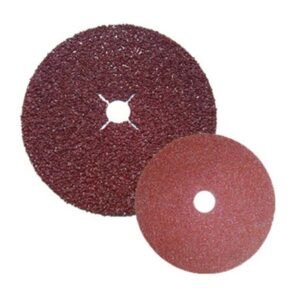
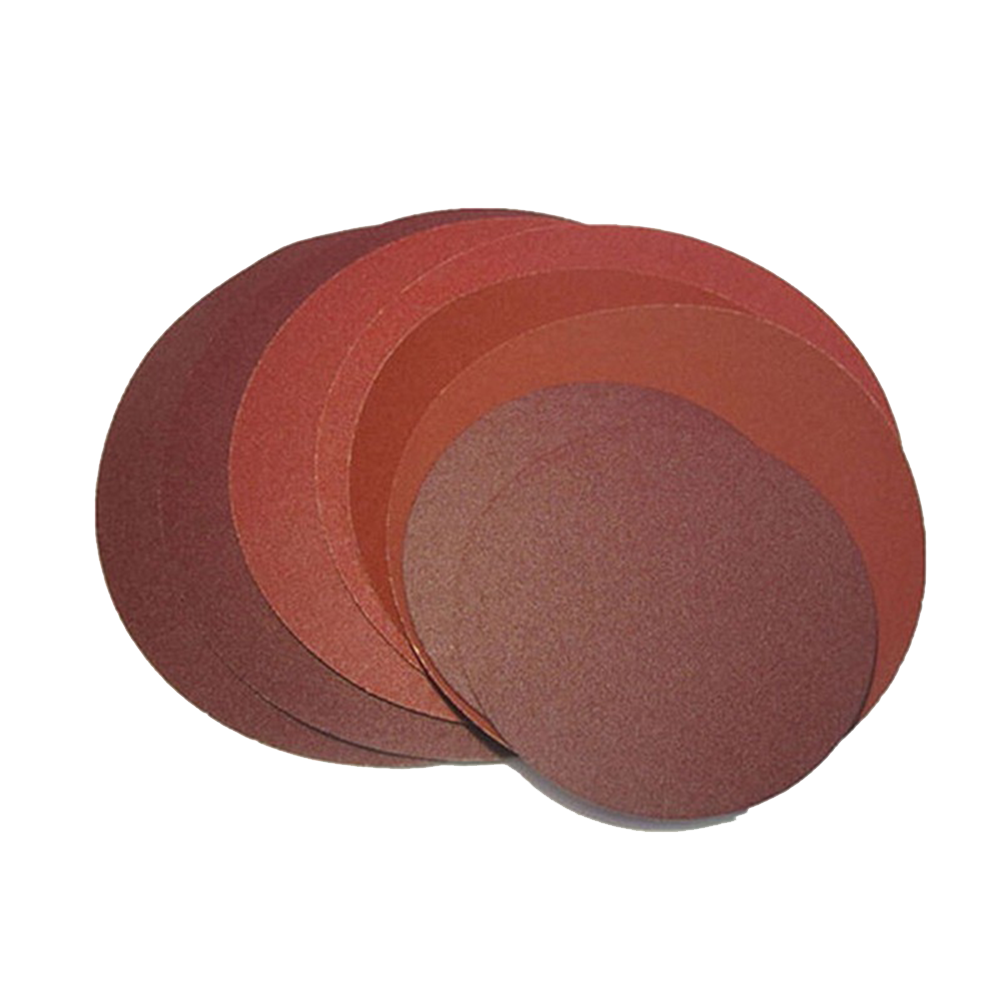
GUSHI Abrasive Sanding Discs combine fast cutting with a consistent scratch pattern and an anti-loading coating that resists clogging, so productivity rises while material consumption falls. They are supplied in 100, 115, 125, 150, 180 and 230 mm diameters with hook and loop or PSA self-adhesive backing, in no-hole, 5-hole, 6-hole, 8-hole, 9-hole and universal perforated patterns, and in grits from P40 to P2000 in aluminium oxide, silicon carbide or zirconia. They grind and polish metal and non-metal materials including wood, rubber, leather, plastic, stone and glass. They are made by Huzhou Gu’s Imp. & Exp. Co., Ltd., a Zhejiang abrasives and diamond tool manufacturer founded in 2004 that is ISO 9001:2015 certified and exports to more than 20 countries.
Two things decide whether a disc is worth buying: how it cuts when new, and how long it keeps cutting. The first comes from grain quality and coating; the second from resisting loading, because a disc that clogs stops removing material long before the abrasive is actually worn out. These discs are built around both — a uniform grain layer for an even scratch pattern, and an anti-loading treatment that keeps swarf from packing between the grains.
The range is deliberately complete. One supplier covers every common sander diameter, both attachment types and every mainstream hole pattern, so a distributor can service woodworking, metal fabrication, stone finishing and automotive refinishing from a single product line with consistent quality and one point of contact.
Full Specifications
| Parameter | Specification |
|---|---|
| Product name | Abrasive Sanding Discs |
| Shape | Round disc |
| Diameters | 100 / 115 / 125 / 150 / 180 / 230 mm |
| Attachment | Hook and loop (velcro) or PSA self-adhesive |
| Hole patterns | No-hole, 5-hole, 6-hole, 8-hole, 9-hole, universal perforated |
| Abrasive minerals | Aluminium oxide (standard), silicon carbide, zirconia |
| Grit range | P40 – P2000 |
| Common grits | P40 / P60 / P80 / P120 / P180 / P240 / P320 / P400 / P600 / P800 / P1000 / P1500 / P2000 |
| Backing materials | Paper (several weights), cloth, film |
| Coating | Closed coat standard; open coat on request |
| Anti-loading treatment | Stearate coating standard on wood and paint grades |
| Bond | Resin over resin |
| Max operating speed | Up to 12,000–13,000 rpm depending on diameter (see disc marking) |
| Max peripheral speed | ≈80 m/s (subject to disc and pad rating) |
| Compatible machines | Random orbital sanders, rotary sanders, angle grinders with backing pad |
| Workpiece materials | Wood, metal, paint, filler, stone, glass, plastic, rubber, leather |
| Dust extraction | With matched hole pattern and extraction port |
| Disc thickness | ≈0.4–0.7 mm depending on backing |
| Colour coding | By grit and mineral, per customer specification |
| Packing | 50 or 100 pcs/box; 1000–2000 pcs/carton |
| Shelf life | ≈24 months stored dry at room temperature |
| Quality system | ISO 9001:2015; 100% inspection before shipment |
| Material compliance | RoHS-compliant materials |
| MOQ | 500 pcs (diameters, grits and patterns mixable) |
| Lead time | 5–10 days standard; 15–30 days custom |
| Payment terms | T/T, L/C, D/A, D/P, PayPal |
What Makes a Disc Cut Fast and Last
Consistent scratch pattern
A disc is only as good as the uniformity of its grain layer. Even grain distribution means every part of the disc removes the same amount of material, producing a scratch pattern that the next grit can fully remove. Uneven grain leaves isolated deep scratches that survive several grit steps and only become visible under a finish — the most common cause of rework in refinishing.
Loading, not wear, ends most discs
On paint, primer, filler, resinous softwood and soft metals, swarf packs between the grains within minutes. The disc then rubs instead of cutting, heat builds, the bond softens and the workpiece burns. The anti-loading stearate coating and open-coat options exist specifically to delay that point, which is why they add more real life than a change of mineral in most applications.
Why hole pattern is a performance spec
Holes in the disc must line up with holes in the pad and with the machine’s extraction path. When they do, dust is removed at the point of cutting and the disc stays sharp; when they do not, extraction is blocked and loading starts immediately. Universal perforated patterns solve the problem for mixed fleets by fitting most layouts.
Speed limits and safety margin
Every disc carries a maximum speed. Exceeding it risks the disc tearing apart, and the rating applies to the disc, the backing pad and the machine together — the lowest of the three governs. Fit the guard, check the disc for damage before mounting, and never use a disc that has been dropped or creased.
Key Features Explained
Fast cutting
Sharp, well-anchored grain with the correct coating removes material on the first pass rather than after several. In production terms that means fewer passes per part, less time per component and less heat in the workpiece — which in turn reduces the risk of burn and distortion.
Anti-loading capability
The stearate coating lowers friction and helps swarf release from the grain, while open-coat construction increases the space available for it. Together they keep the disc cutting on the materials that load fastest, so the abrasive is consumed by work rather than by clogging.
Productivity and material savings
A disc that cuts fast and resists loading is used for longer and changed less often. That reduces both the number of discs consumed and the labour cost of changing them, which is usually a larger part of finishing cost than the abrasive itself.
Complete size and pattern range
With six diameters, two attachment types and six hole patterns, the line covers virtually every sander in service. For distributors that means fewer stock gaps and a single quality benchmark across the whole category.
Mineral choice by material
Aluminium oxide handles wood, steel and paint; silicon carbide suits stone, glass and non-ferrous metals; zirconia gives aggressive stock removal on hard metal. Offering all three lets buyers specify the right mineral instead of accepting a compromise.
Diameter, Hole Pattern and Grit Guide
Three quick checks: machine diameter, extraction pattern, then grit.
| Diameter | Typical machine | Common use |
|---|---|---|
| 100 mm (4″) | Compact random orbital sanders | Detail work, furniture, tight panels |
| 115 mm (4.5″) | Angle grinders with backing pad | Localised metal and weld work |
| 125 mm (5″) | Standard random orbital sanders | Most common size — general wood, paint and filler |
| 150 mm (6″) | Large random orbital sanders | Wide panels, faster coverage |
| 180 / 230 mm | Large rotary sanders and grinders | Floors, large flat surfaces |
| Task | Grit sequence | Mineral |
|---|---|---|
| Paint and varnish stripping | P40 → P80 → P120 | Aluminium oxide, open coat |
| Bare wood preparation | P80 → P120 → P180 | Aluminium oxide |
| Filler and primer flattening | P120 → P240 → P320 | Aluminium oxide, stearate |
| Between coats and denibbing | P320 → P400 → P600 | Aluminium oxide or film |
| Stone and engineered stone | P120 → P240 → P400 | Silicon carbide |
| Metal blending and finishing | P60 → P120 → P240 | Aluminium oxide or zirconia |
Applications & Suitable Materials
Applications
| Application | Why this disc fits | Setup |
|---|---|---|
| Furniture and joinery finishing | Consistent pattern, one grit step to the next | 125 mm, P80–P240 |
| Automotive refinishing | Fine grits and anti-loading on primer and filler | 150 mm, P120–P600 |
| Paint and varnish removal | Fast cut with open coat resisting clogging | 125 mm, P40–P80 |
| Metal fabrication and weld blending | Tough grain, works on backing pads at speed | 115 mm, P60–P240 |
| Stone and engineered stone finishing | Silicon carbide option cuts hard surface | 125 mm, P120–P400 |
| Plastics, GRP and composites | Controlled cut without melting | 125 mm, P180–P400 |
| Leather and rubber trimming | Coarse grits remove material cleanly | 100 mm, P40–P80 |
Suitable Materials
| Works well | Notes |
|---|---|
| Hardwood, softwood, MDF, veneer | Use extraction; resinous species load discs quickly |
| Paint, primer, lacquer, filler | Stearate-coated grades recommended |
| Carbon steel and non-ferrous metals | Keep separate discs for stainless work |
| Stone, engineered stone, terrazzo | Silicon carbide or diamond for best life |
| Glass and mirror edges | Wet where possible to control heat |
| Plastics, GRP, rubber, leather | Light pressure to avoid heat build-up |
Coated Disc vs. Fibre Disc vs. Flap Disc vs. Mesh Disc
Four disc technologies, often confused with one another. They solve different problems.
| Dimension | Coated disc (this product) | Fibre disc | Flap disc | Mesh / net disc |
|---|---|---|---|---|
| Construction | Abrasive on paper, cloth or film | Abrasive on vulcanized fibre | Overlapping abrasive flaps | Open net with abrasive |
| Aggressiveness | Moderate | ✓ Very high | High | Moderate |
| Finish quality | ✓ Best across the grit range | Coarse | Good, blends grinding and finishing | Very good, uniform |
| Grit range | ✓ P40–P2000 | P16–P120 | P40–P120 | P80–P400 |
| Dust extraction | ✓ With holes | None | None | ✓ Excellent — dust passes through |
| Loading resistance | Good with coating | Poor on soft material | Good | ✓ Best — open structure |
| Life | Good | Short but fast | Long | ✓ Longest on fine grits |
| Heat at the work | ✓ Low | High | Moderate | ✓ Low |
| Cost per disc | ✓ Lowest | Low | Highest | High |
| Best for | General sanding and finishing | Heavy weld and stock removal | Grinding and blending in one step | Dust-free fine finishing |
Bottom line: For general sanding and finishing the coated disc remains the default — lowest cost, widest grit range and best finish. Move to fibre or flap discs when the job is heavy stock removal, and to mesh discs when dust-free fine finishing justifies the higher price.
How to Use: Step-by-Step Guide
- Confirm the sander’s pad diameter and hole pattern before choosing a disc.
- Select the mineral: aluminium oxide for wood, paint and steel; SiC for stone and glass; zirconia for aggressive metal removal.
- Pick the starting grit from the guide — coarse enough to cut, fine enough not to waste time.
- Check the disc’s printed speed rating against the machine; never exceed the lower of the two.
- Inspect the disc: no tears, creases or damaged holes, and hooks or adhesive in good condition.
- Centre the disc on the pad, aligning holes with the extraction path, and press it on firmly.
- Connect dust extraction wherever the machine and disc allow it.
- Start the sander, then place it flat on the work; let the machine’s weight do the cutting.
- Move in overlapping passes, keeping the pad flat to avoid edge gouges and swirl marks.
- Step through the grits one at a time, cleaning the surface between stages.
- Replace the disc when it glazes, loads or needs pressure to cut.
- Remove the disc after use, clean the pad, and store discs flat in a dry place.
Complete the abrasives range: Triangle Sanding Discs for corners, Diamond Sanding Sheets for stone and glass, and Aluminium Oxide Sanding Rolls for hand work.
Frequently Asked Questions
What diameters and hole patterns are available?
Standard diameters are 100, 115, 125, 150, 180 and 230 mm, covering most random orbital and rotary sanders. Hole patterns include no-hole, 5-hole, 6-hole, 8-hole, 9-hole and universal perforated, which fits most pad layouts. Match the diameter to the pad exactly and the hole pattern to the machine’s extraction, because a mismatched pattern blocks dust collection and makes the disc load quickly.
Should I choose hook and loop or PSA discs?
Choose hook and loop when grits are changed often, because a disc can be removed and refitted several times without losing grip, which is the normal case in woodworking and paint preparation. Choose PSA, a self-adhesive backing, where a single grit is used for a long run or where speed and heat are higher, as on an angle grinder with a backing pad. PSA is usually cheaper per disc but single use.
What grit should I use for each stage?
Use P40 to P80 for paint stripping and heavy stock removal, P100 to P180 for general wood and filler preparation, P240 to P400 for fine sanding before coating, and P600 to P2000 for denibbing, between-coat sanding and final finishing. Move one grit step at a time; skipping more than one leaves scratches that only appear after the finish is applied.
What does the anti-loading coating do?
Loading happens when paint, resin, softwood pitch or metal swarf packs between the grains so the disc stops cutting and starts burning the work. The anti-loading stearate coating reduces friction and helps swarf release, and open-coat construction increases grain spacing. Combined with dust extraction, it is the difference between a disc that lasts and one that glazes in minutes.
Can these discs be used on an angle grinder?
Yes, with the correct rubber or polyurethane backing pad and within the disc’s printed speed rating, commonly 12,000 to 13,000 rpm or 80 m/s depending on diameter. Never exceed the rating marked on the disc or the pad, never use a damaged disc, and always fit the guard. For heavy stock removal on steel, a fibre disc is usually the better tool.
What materials can they sand?
They handle hardwood and softwood, MDF and veneer, paint, primer and filler, carbon steel and non-ferrous metals, stone and engineered stone, glass, plastics, GRP, rubber and leather. Choose the mineral by material: aluminium oxide for wood, steel and paint, silicon carbide for stone, glass and non-ferrous metals, and zirconia for aggressive stock removal.
When should a disc be replaced?
Replace it when the edge looks rounded or glazed, when it stops cutting and needs extra pressure, when the hook backing no longer grips, or when the holes or rim are torn. A torn disc can fail at speed, so discard it rather than refitting. Keeping to a simple rule — if it needs pressure, it is finished — saves both the workpiece and the sander’s bearing load.
What is the MOQ and what can be customised?
The OEM MOQ is 500 pieces, and diameters, grits, minerals and hole patterns can be mixed in one order. Customisation covers diameter, hole pattern, mineral, grit range, backing material and weight, coating, hook and loop or PSA, private-label sleeves and boxes. Production runs under ISO 9001:2015; lead time is 5 to 10 days for standard items and 15 to 30 days for custom.
OEM & Wholesale Information
| OEM / wholesale parameter | Details |
|---|---|
| MOQ | 500 pcs; diameters, grits, minerals and patterns mixable |
| Diameters | 100 / 115 / 125 / 150 / 180 / 230 mm, others to order |
| Attachment | Hook and loop or PSA self-adhesive |
| Hole patterns | No-hole, 5, 6, 8, 9-hole, universal perforated, custom layouts |
| Minerals | Aluminium oxide, silicon carbide, zirconia |
| Private label | Sleeves, header cards, boxes, logo printing, barcodes |
| Standard packing | 50 or 100 pcs/box; 1000–2000 pcs/carton |
| Sample policy | Samples at cost price plus freight; fee refunded on the official order |
| Payment terms | T/T, L/C, D/A, D/P, PayPal |
| Port of loading | Shanghai or Ningbo, China |
| Quality control | 100% inspection before shipment; ISO 9001:2015, SGS |
| Service languages | English, Spanish, Japanese, Russian, French, German |
Huzhou Gu’s Imp. & Exp. Co., Ltd. (brands GUSHI Tools and Roycel) has manufactured abrasives, tile installation tools and diamond tools from Zhejiang since 2004, drawing on a supply chain active in this industry since 1998 and a production capacity of 100,000 sets per month. The company is ISO 9001:2015 certified, exports to more than 20 countries including the USA, Germany, the UK, the Netherlands, Brazil, Chile and Australia, and was one of 23 Chinese firms that won the US anti-dumping case on diamond blades at a 6.2% rate.
Continue through the abrasives range: Triangle Sanding Discs, Concrete Floor Polishing Pads, and Silicon Carbide Abrasive Belts.