Product Overview


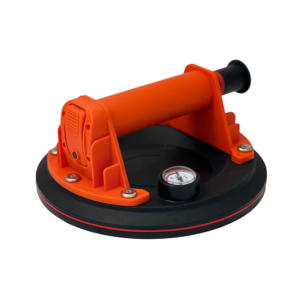
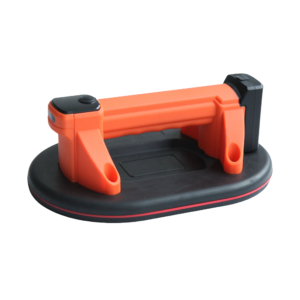
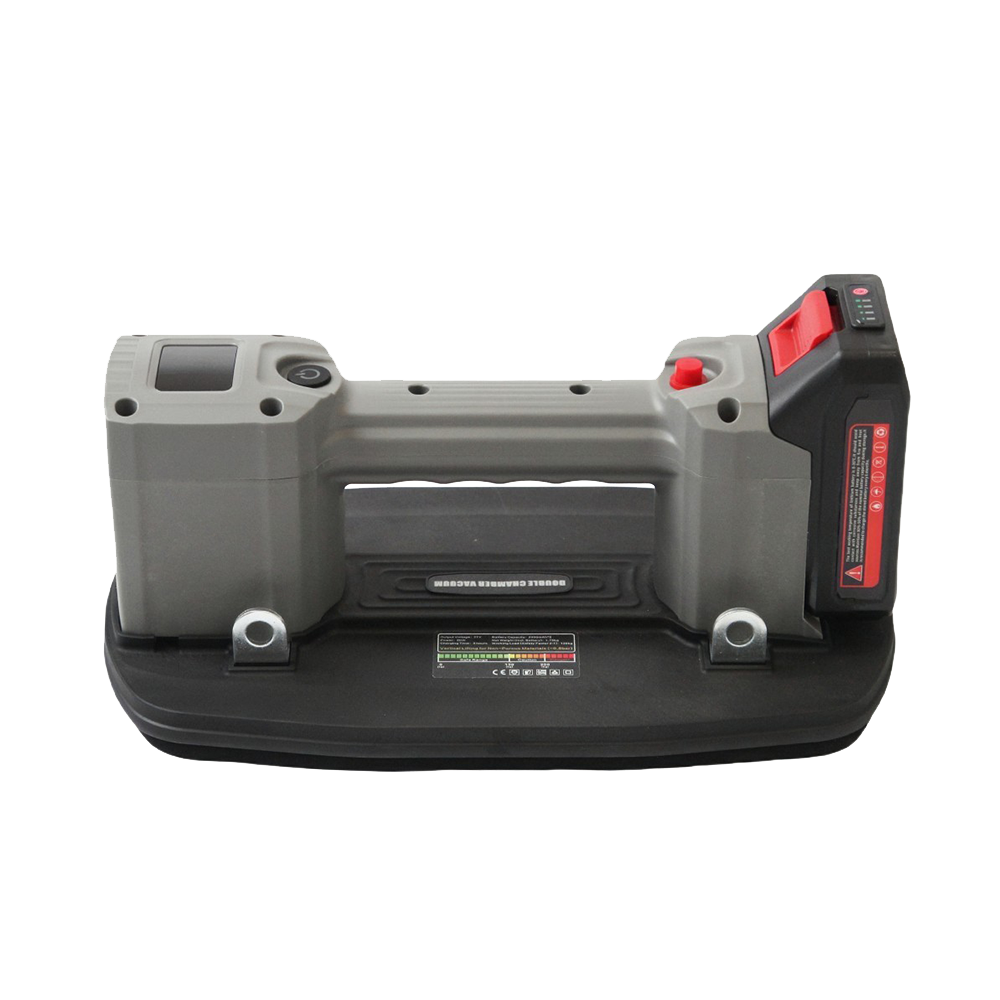
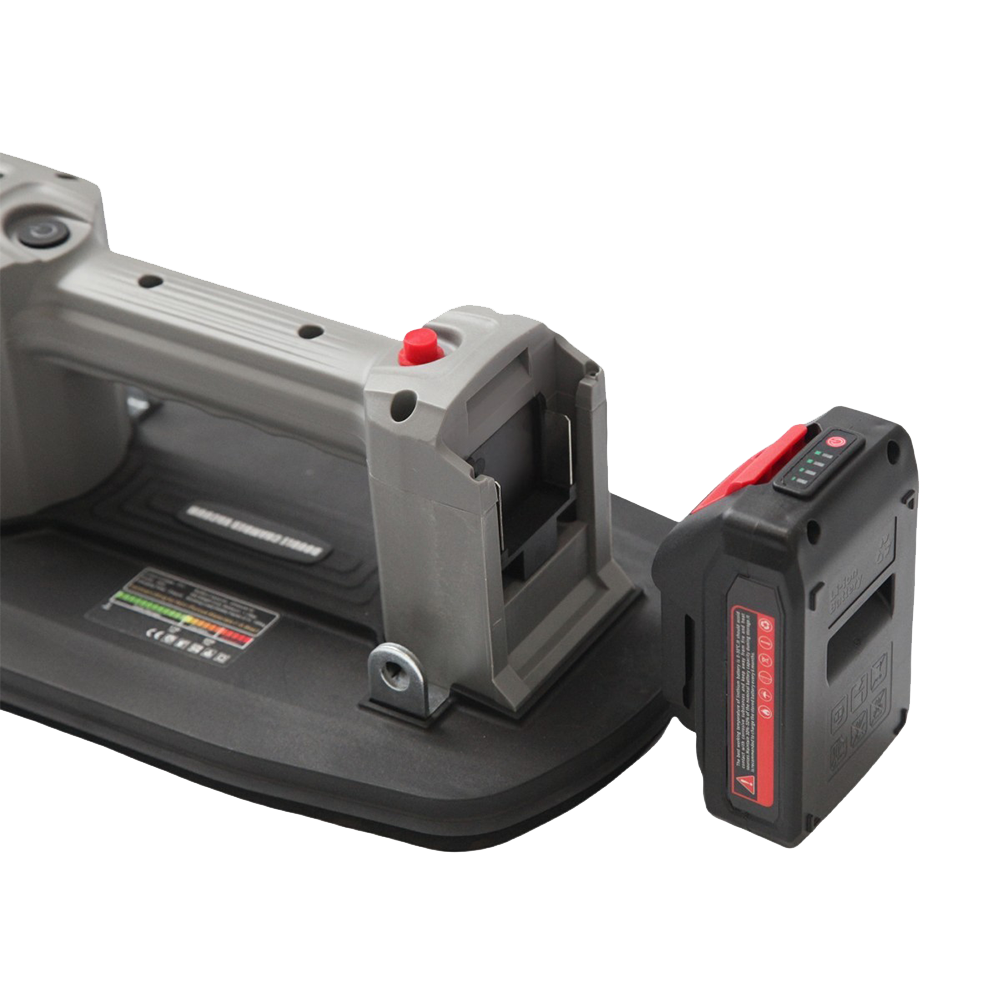
The GUSHI G-Ultra Lifter is a 200 kg (441 lb) electric vacuum suction cup built for materials that defeat ordinary pads. A textured pad face, sponge gasket and silicone bracket with peripheral vent ports let it seal on lightly uneven and structured surfaces, producing a vacuum around 5% stronger than comparable designs. The replaceable lithium battery bay is also adaptable to Makita 18V slide-style packs, so crews can run it on the batteries already on site. Separate power and release switches make accidental release a deliberate two-finger action. It is built by Huzhou Gu’s Imp. & Exp. Co., Ltd., a Zhejiang manufacturer founded in 2004 that is ISO 9001:2015 and CE certified and exports to more than 20 countries.
Most electric suction cups assume a perfectly flat, glazed surface. Real jobs do not: matte porcelain, riven paving, lightly structured tile and stone with a honed finish all leak air past a hard smooth pad. The G-Ultra addresses that failure mode directly rather than asking the operator to hunt for a smooth patch, which is why it belongs on slab and paving work rather than only on glazing.
Within the GUSHI range it sits as the specialist for difficult surfaces and heavier loads. For smooth-only work under 150 kg, the digital SC-B001 and the 210 mm GSH-DSC210 remain the value choices; the G-Ultra is the tool you reach for when the material will not cooperate or the panel is heavier.
Full Specifications
| Parameter | Specification |
|---|---|
| Product name | G-Ultra Lifter (electric vacuum suction cup) |
| Model | G-Ultra |
| Type | Battery-powered vacuum lifter with automatic pressure maintenance |
| Maximum safe working load | 200 kg (441 lb) |
| Recommended load — textured surfaces | 120–150 kg (reduce 25–40%) |
| Working vacuum level | ≈-80 kPa |
| Theoretical pull-off force | ≈3,300 N (≈335 kgf) |
| Safety factor (rated vs theoretical) | ≈1.7:1 |
| Pad design | Textured face for uneven surfaces |
| Sealing system | Sponge gasket + silicone bracket with peripheral vent ports |
| Vacuum performance | ≈5% stronger than comparable standard designs |
| Surface compatibility | Smooth, matte and lightly textured / structured surfaces |
| Automatic pressure maintenance | Yes — pump restores vacuum when it falls below threshold |
| Control layout | Separate power switch and pressure-release switch |
| Handle | Widened, anti-slip, one-hand carry |
| Battery type | Replaceable lithium-ion, tool-free swap |
| Battery compatibility | GUSHI pack; bay adaptable to Makita 18V slide-style packs |
| Runtime | ≈4–6 hours of active intermittent use per charge |
| Charging time | ≈2–3 hours |
| Housing material | ABS engineering plastic with rubber over-grip |
| Operating temperature | -10 °C to +50 °C |
| Net weight (with battery) | ≈1.5 kg |
| Packing | 1 pc colour box; 6 pcs/outer carton |
| Compliance | CE, RoHS, UN38.3 (battery transport) |
| Certifications | ISO 9001:2015, CE, SGS inspected |
| MOQ | 100 units |
| Lead time | 7–15 days stock; 25–35 days OEM |
| Payment terms | L/C, T/T, Western Union, PayPal |
How the G-Ultra Grips Uneven Surfaces
The pad is only as good as its seal
A vacuum cup holds because atmospheric pressure presses it onto a surface once the air underneath is removed. That only works if the seal is continuous. On glazed tile a hard smooth pad seals everywhere at once; on matte or structured material it touches only the high points and air leaks in along the valleys, which is why a cup rated for 200 kg silently loses grip on a textured slab.
Sponge gasket, silicone bracket and peripheral vents
The G-Ultra solves this with three parts working together. The sponge gasket compresses into surface variation and bridges the valleys. The silicone bracket keeps the pad from rocking under load, which would otherwise open a gap on one side. Peripheral vent ports connect to the base so air is drawn from around the whole pad rather than a single point, which is what produces the roughly 5% stronger vacuum and faster initial pull-down.
What -80 kPa means in practice
At a working vacuum of -80 kPa the pad develops about 3,300 N of theoretical pull-off force, the equivalent of roughly 335 kg. The published 200 kg rating applies a safety factor of about 1.7 to cover vibration, tilting while walking and imperfect surfaces. On textured material the effective contact area is lower, which is why we recommend 120–150 kg there rather than the full 200 kg.
Dual-switch safety logic
Power and release are physically separate controls. One starts and stops the pump; the other opens the release valve. Because releasing requires a second, deliberate action on a different switch, a knuckle brushing the housing while carrying a panel cannot dump the vacuum — a small piece of design that prevents the worst kind of site accident.
Key Features Explained
200 kg capacity for heavy panels
Two hundred kilograms covers most of what a two-person crew handles: large-format porcelain slabs, granite countertops, double-glazed units and thick paving. It removes the need for a second tool or a third pair of hands on jobs that would otherwise sit right at the limit of a 120–150 kg cup.
Textured-surface capability
This is the reason to choose the G-Ultra over a standard electric cup. Matte porcelain, honed stone, riven paving and lightly structured tile are common on modern jobs, and they are exactly the surfaces where ordinary pads fail. Being able to lift them directly — instead of hunting for a smooth patch or switching to a clamp — saves time on every slab.
Makita-adaptable battery bay
The bay accepts the supplied GUSHI pack and is also adaptable to Makita 18V slide-style lithium batteries. Contractors running Makita platforms can power the lifter from the batteries already on the van, standardise chargers, and keep working when the dedicated pack is on charge. Spares swap in seconds without tools.
Widened anti-slip handle
A wider grip spreads load across the palm and gives better control when carrying a heavy panel at arm’s length. Combined with the balanced body, it reduces the wrist strain that builds up over a day of repeated lifts.
Automatic vacuum maintenance
During long positioning jobs the tool monitors its own vacuum and tops it up as needed, so a slab being aligned, shimmed and pressed home stays gripped without the operator stopping to re-pump.
Selection Guide: Surface, Load and Battery
Use the surface condition and panel weight together — never the weight alone.
| Surface condition | Recommended load | Notes |
|---|---|---|
| Glass, glazed ceramic, polished porcelain | Up to 200 kg | Full rating; best-case seal |
| Polished marble, granite, engineered quartz | 170–200 kg | Verify seal with a test lift |
| Matte / satin porcelain | 140–170 kg | Textured pad handles it; keep margin |
| Lightly structured or honed stone | 120–150 kg | Reduce 25–40%; check vacuum often |
| Riven paving, heavy profile | 80–120 kg | Test lift essential; two cups preferred |
| Raw concrete, open-porous stone | Not recommended | Use a mechanical clamp |
| Battery option | Expected runtime | When to use |
|---|---|---|
| GUSHI pack (supplied) | ≈4–6 h active use | Standard supply, one spare per tool |
| Makita 18V 3.0 Ah | ≈4–6 h | Sites already running Makita platforms |
| Makita 18V 5.0 Ah | ≈7–10 h | Full-day slab installation |
Applications & Suitable Materials
Applications
| Application | Why the G-Ultra fits | Setup |
|---|---|---|
| Large-format porcelain slab installation | 200 kg capacity plus grip on matte finishes | 1–2 cups; two operators over 1.5 m |
| Granite and quartz countertop setting | Heavy load with controlled positioning | 2 cups for slabs over 1.5 m |
| Paving and riven slab laying | Textured pad grips where smooth pads slip | 1 cup, reduced load, test lift |
| Glass and glazing work | Non-marking seal, high capacity | 1–2 cups, vertical carry |
| Facade and cladding panel handling | Handles structured panel faces | 2 cups |
| Workshop and warehouse material transfer | Makita batteries keep it running all shift | 1 cup + spare battery |
| Stone fabrication shop | Moving honed and semi-finished pieces | 1–2 cups |
Suitable Materials
| Works well | Reduce load or use another tool |
|---|---|
| Glazed ceramic and polished porcelain tile | Deeply profiled or heavily riven stone — reduce to 80–120 kg |
| Matte and satin porcelain | Open-porous stone — no seal possible |
| Polished and honed marble, granite, quartz | Raw concrete and screed — use a clamp |
| Glass, mirror and glazed panels | Wet, oily or dusty surfaces of any material |
| Sheet metal and finished composite panels | Loose or flaking coatings |
G-Ultra vs. Standard Electric Cup vs. Manual Cup
Three GUSHI tools for three different realities: difficult surfaces, everyday smooth panels, and no-power backup.
| Dimension | G-Ultra Lifter (this model) | Standard electric cup (SC-B001) | Manual cup (SC-A001) |
|---|---|---|---|
| Safe load | ✓ 200 kg | 150 kg | 60–150 kg by pad size |
| Textured / uneven surfaces | ✓ Yes — textured pad + sponge gasket | Smooth surfaces only | Smooth surfaces only |
| Vacuum strength | ✓ ≈5% above comparable designs | Standard | Depends on pumping |
| Battery platform | ✓ GUSHI pack + Makita 18V adaptable | GUSHI pack only | ✓ None required |
| Accidental-release protection | ✓ Separate power and release switches | Gesture control | Manual lever |
| Automatic vacuum maintenance | ✓ Yes | ✓ Yes | Manual re-pump |
| Handle | ✓ Widened anti-slip | Standard grip | Standard grip |
| Net weight | ≈1.5 kg | ≈1.3 kg | ✓ 0.9–1.5 kg |
| Price per unit | US$65–160 | US$48–110 | ✓ US$3–18 |
| Best for | Heavy panels and surfaces that are not perfectly smooth | Everyday smooth-panel lifting with digital readout | Intermittent work and power-free backup |
Also in the range: the 210 mm double-layer digital cup (220 kg) and the 167 × 247 mm rectangular double-layer cup (260 kg) cover smooth-to-slightly-rough work at higher ratings, while the manual SC-A001 stays the tool that never needs charging.
Bottom line: Choose the G-Ultra when the material or the weight is the problem — textured slabs, heavy stone, or a site already running Makita batteries. Choose the standard digital cup for smooth-panel work at a lower price, and keep a manual cup in the van for everything else.
How to Use: Step-by-Step Guide
- Charge the battery (≈2–3 h) or fit a charged Makita 18V pack; confirm the indicator.
- Inspect the sponge gasket and textured pad — no tears, no embedded grit, no permanent compression.
- Clean the panel surface; remove dust, water and release agents from the contact area.
- Assess the surface and set your expected load from the selection table above.
- Place the cup flat, centred on the load’s centre of gravity or at the quarter points with two cups.
- Press the power switch to start the pump; it stops automatically once working vacuum is reached.
- Wait for the indicator to confirm full vacuum before any lifting movement.
- Do a 5 cm test lift and hold ten seconds — especially on matte or textured material.
- Carry with the widened handle, panel vertical where possible, load close to the body.
- Watch for pump top-ups during positioning; frequent restarts mean the seal is leaking.
- Press the separate release switch to break vacuum, then lift the tool clear.
- Clean the gasket, store the tool dry, and keep a charged spare battery in the case.
Related tools: Digital Electric Vacuum Suction Cup, Manual Vacuum Suction Cup SC-A001, and the 2-in-1 Tile Vibration Machine.
Frequently Asked Questions
What makes the G-Ultra lifter different from other GUSHI suction cups?
Three things: a 200 kg working load, a textured-surface pad system that grips materials standard smooth pads slip on, and a battery bay adaptable to Makita 18V slide-style packs so crews can run the tool on batteries they already own. A sponge gasket, silicone bracket and peripheral vent ports also produce a vacuum about 5% stronger than comparable designs.
Can it really grip uneven or textured surfaces?
Yes, within limits. The sponge gasket compresses into surface variation while the silicone bracket keeps the pad stable and the textured face maintains grip, so the tool holds on lightly structured tile, matte porcelain and riven paving where a hard smooth pad would leak. On heavily porous or deeply profiled material, reduce the load by 30 to 50 percent or use a mechanical clamp.
Is the G-Ultra compatible with Makita batteries?
The battery bay is designed to accept Makita 18V slide-style lithium packs as well as the GUSHI replaceable battery supplied with the tool. That lets contractors standardise on one battery platform across the site. Makita is a trademark of its respective owner; GUSHI tools are compatible with, not manufactured by, that brand.
How much weight can the G-Ultra lift?
The safe working load is 200 kg (441 lb) on clean, flat, non-porous surfaces. The pad at a working vacuum of about -80 kPa develops roughly 3,300 N of theoretical pull-off force, around 335 kgf, so the 200 kg rating keeps a safety factor near 1.7 for vibration, tilting and imperfect surfaces. On textured material, plan for 120 to 150 kg.
How long does the battery last and how long does charging take?
The supplied lithium pack gives a full working day of intermittent lifting, roughly 4 to 6 hours of active use, and recharges in about 2 to 3 hours. Because the bay also accepts Makita 18V packs, a 5.0Ah pack extends runtime further and a spare can be swapped in seconds with no tools.
Why are the power switch and release switch separate?
Separating them prevents accidental release. On a single-switch tool, brushing the control while carrying a panel can dump the vacuum mid-lift. On the G-Ultra the power switch starts the pump and a physically separate switch opens the release valve, so releasing grip is always a deliberate two-finger action.
What materials and jobs is it built for?
It is built for large-format porcelain panels, ceramic tile, glass, polished and lightly textured stone, quartz worktops and sheet metal. Typical jobs include slab installation, countertop setting, glazing, paving and workshop panel handling. It is not intended for raw concrete, open-porous stone or heavily profiled surfaces where no seal can form.
What is the MOQ, and are OEM and samples available?
The OEM MOQ is 100 units, with mixed models permitted in one order. Customisation covers housing colour, logo, pad compound, packaging and retail artwork. Samples are supplied at cost price plus freight, with the sample fee refunded on the first official order. Delivery is 7 to 15 days for stock and 25 to 35 days for OEM, shipped from Shanghai or Ningbo.
OEM & Wholesale Information
| OEM / wholesale parameter | Details |
|---|---|
| MOQ | 100 units; models can be mixed in one order |
| Customisation | Housing colour, logo, pad compound and texture, packaging artwork, manual language |
| Battery options | GUSHI pack, Makita-compatible bay, or battery-free shipment; UN38.3 and MSDS provided |
| Charger options | EU, US, UK and AU plugs |
| Packing | 1 pc colour box, 6 pcs/outer carton; private-label artwork supported |
| Spare parts | Sponge gaskets, silicone brackets, pads, batteries and chargers |
| Sample policy | Samples at cost price plus freight; fee refunded on the official order |
| Payment terms | L/C, T/T, Western Union, PayPal |
| Port of loading | Shanghai or Ningbo, China |
| Quality control | 100% inspection before shipment; ISO 9001:2015, CE, SGS |
Huzhou Gu’s Imp. & Exp. Co., Ltd. (brands GUSHI Tools and Roycel) has manufactured and exported tile installation and material handling tools from Zhejiang since 2004, backed by a supply chain active in this industry since 1998 and a production capacity of 100,000 sets per month. The company is ISO 9001:2015 and CE certified, exports to more than 20 countries including the USA, Germany, the UK, the Netherlands, Italy, Brazil, Australia and South Africa, and was one of 23 Chinese firms that won the US anti-dumping case on diamond blades at a 6.2% rate.
Continue through the suction cup range: 8-Inch Double-layer Digital Suction Cup (210 mm), Double Layer Integrated Digital Suction Cup (167 × 247 mm), and Digital Electric Vacuum Suction Cup SC-B001.